
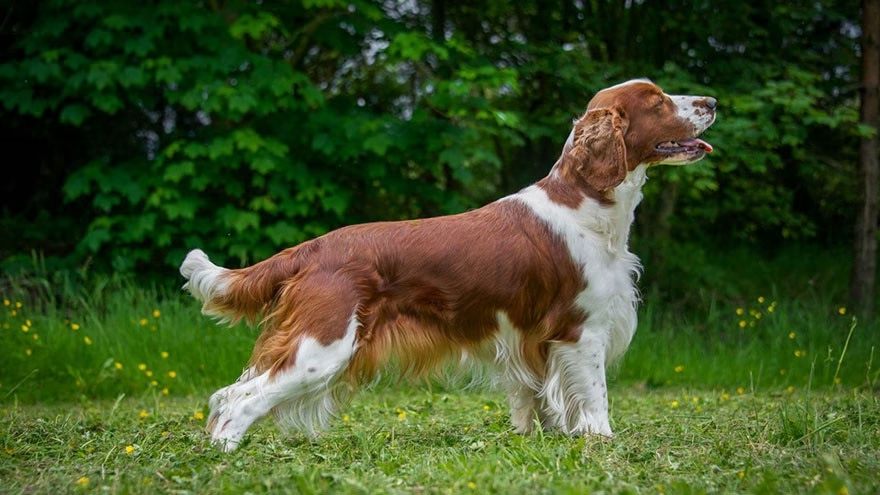
An English Springer Spaniel can be an affectionate family dog, an eager hunting companion, a sport partner, or a cheerful shadow that wants to be involved in every room. That range is exactly why breeder choice matters. A responsible breeder should not sell you a cute spaniel face and leave you to discover later that the dog needs more activity, grooming, training, and mental work than your household can provide.
The title of the source article says "Owning a English Springer Spaniel," and the grammar is awkward, but the buyer question is clear: how do you choose a breeder who is honest about the breed? Start by looking for health testing, thoughtful temperament matching, clean puppy raising, and a breeder who can explain whether their dogs are closer to bench, field, or all-around companion lines.
Know What Kind Of Springer You Want
The American Kennel Club describes the English Springer Spaniel as a bird dog with energy, stamina, brains, and an easy family manner when properly raised. That is the good news. The practical part is that energy and stamina still need a place to go. A Springer without training, exercise, and people time can become noisy, pushy, or restless.
Ask breeders what their dogs are bred to do. Bench or show-focused Springers are often selected for conformation and may have more coat. Field-bred Springers are often selected for hunting drive, speed, nose, and endurance. Individual dogs vary, but the line's purpose affects what daily life feels like. Do not buy a high-drive field puppy because the photo is beautiful if you want a calm apartment companion.
The parent club, the English Springer Spaniel Field Trial Association, identifies itself as the AKC parent club and emphasizes breeding for type, function, health, and sound temperament. That combination is the buyer's target: a dog that looks like the breed, works like the breed, and can live sanely with humans.
If you have considered other sporting breeds, compare honestly. The questions overlap with Brittany Spaniel breeder recommendations: what kind of work is behind the line, how much exercise is realistic, and how does the breeder match puppies to homes?
Health Testing To Ask About
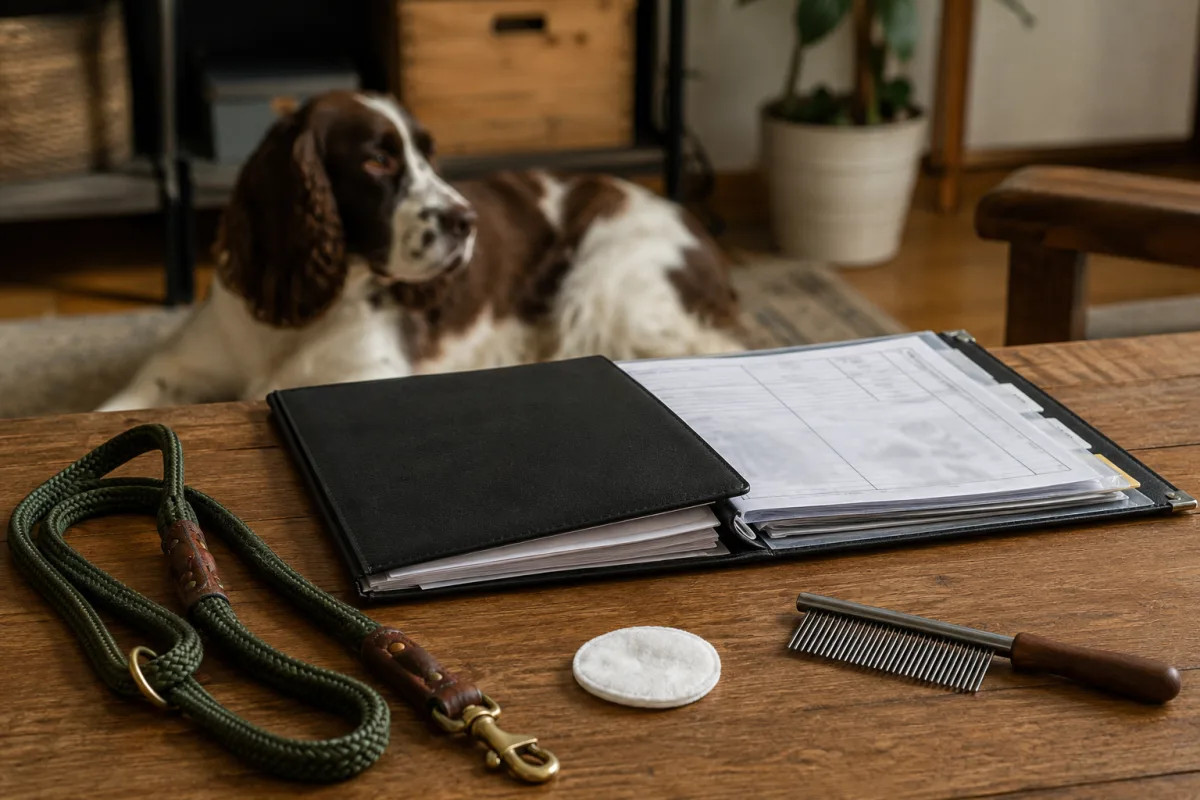
Do not accept "vet checked" as the whole health story. A puppy exam is useful, but breeding dogs need screening for inherited risks. The ESSFTA health statement hosted by AKC says breeders should at minimum screen for progressive retinal atrophy, hip dysplasia, elbow dysplasia, and phosphofructokinase disorder. It also describes eye exams by a veterinary ophthalmologist within a recent time frame.
The AKC's sporting group health testing page lists recommended national-breed-club tests for English Springer Spaniels, including hips, elbows, eyes, cardiac exam, and DNA testing for relevant conditions. Ask to see registered results, not screenshots with names cropped out.
Health testing reduces risk; it does not create a guarantee. A breeder who says "my line has no problems" is less reassuring than one who can explain what they test, what has appeared in relatives, why they chose a pairing, and what they do when a problem appears. Transparency is part of quality.
Breed health thinking transfers across dog guides. Whether reading about Staffordshire Bull Terrier health problems or Springer testing, the useful habit is the same: ask for records, understand patterns, and avoid breeders who treat questions as insults.
Temperament And Puppy Raising
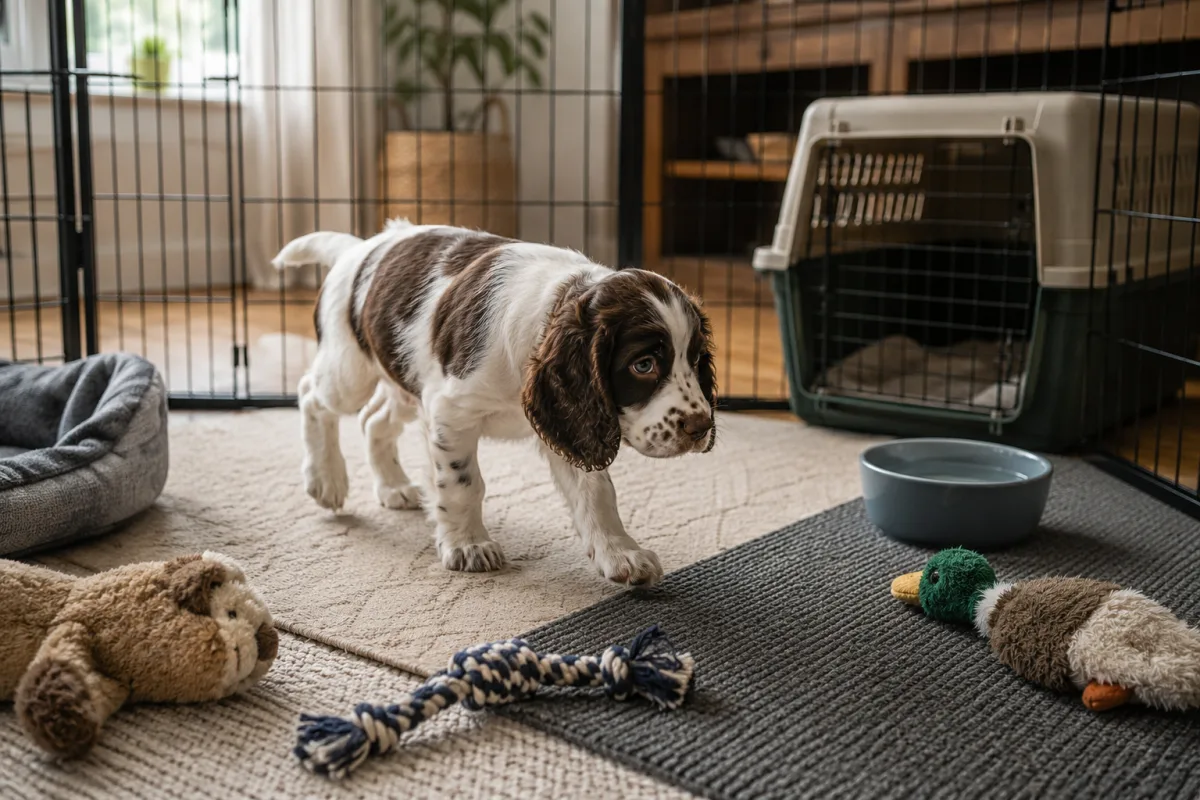
A Springer breeder should know the puppies as individuals. Which puppy is bold? Which one checks in with people? Which one recovers quickly after a noise? Which one is more mouthy, more sensitive, more independent, or more food-driven? A responsible breeder uses those observations to match a puppy to a home rather than letting buyers choose only by color or the puppy that runs over first.
Ask where the puppies are raised. They should experience household sound, gentle handling, nail trims, surfaces, crates, car rides when appropriate, visitors, and short problem-solving games. A puppy raised in a clean kennel can still be undersocialized if it never sees normal life. A puppy raised in a home can still be poorly raised if handling is chaotic.
Springers are often people-oriented and eager, but they can be intense. Puppies need sleep, boundaries, chew outlets, and early training. If the breeder says the dog will train itself because Springers are smart, keep looking. Smart dogs learn everything quickly, including bad habits.
Grooming tolerance should start early too. Springer ears, feet, feathering, and coat need routine care. Owners who have handled grooming-heavy breeds, or even read about grooming a longhair Dachshund, already know that cooperative handling is easier to teach before mats, ear trouble, or muddy feet become urgent.
Breeder Red Flags
Be cautious with breeders who always have puppies available, avoid showing health results, refuse basic questions, push immediate deposits, will not discuss the dam, or sell puppies with no conversation about your home. Also be careful with websites that use many breeds, stock photos, vague health claims, or delivery-first language.
Registration alone is not enough. AKC registration can be part of responsible breeding, but it does not prove health testing, temperament matching, or good puppy raising. A contract alone is not enough either. Read it. Look for return policy, health guarantee terms, registration details, spay or neuter expectations if any, and what happens if you cannot keep the dog.
Ask to meet or see the dam in a normal way, and ask what the sire is like if he does not live there. Some good breeders use outside studs, so not seeing the sire is not automatically a problem. Not being able to discuss either parent's temperament and health is a problem.
What To Ask Before A Deposit
Ask these questions before money changes hands: What health tests have the sire and dam completed? Are results public? What health issues have appeared in relatives? Are these field, bench, or mixed lines? What kind of homes do your puppies usually fit? How do you match puppies? What socialization do you do? What support do you provide after pickup?
Ask practical questions too. What food are the puppies eating? What vaccinations and deworming have been done? What records come with the puppy? Has the puppy been examined by a veterinarian? What grooming has been introduced? What training should start the first week?
Owners comparing sporting breeds may also look at German Shorthaired Pointer questions. The breeds are not the same, but both remind buyers that energy and drive are not flaws. They are traits that need the right household.
Bringing A Springer Home
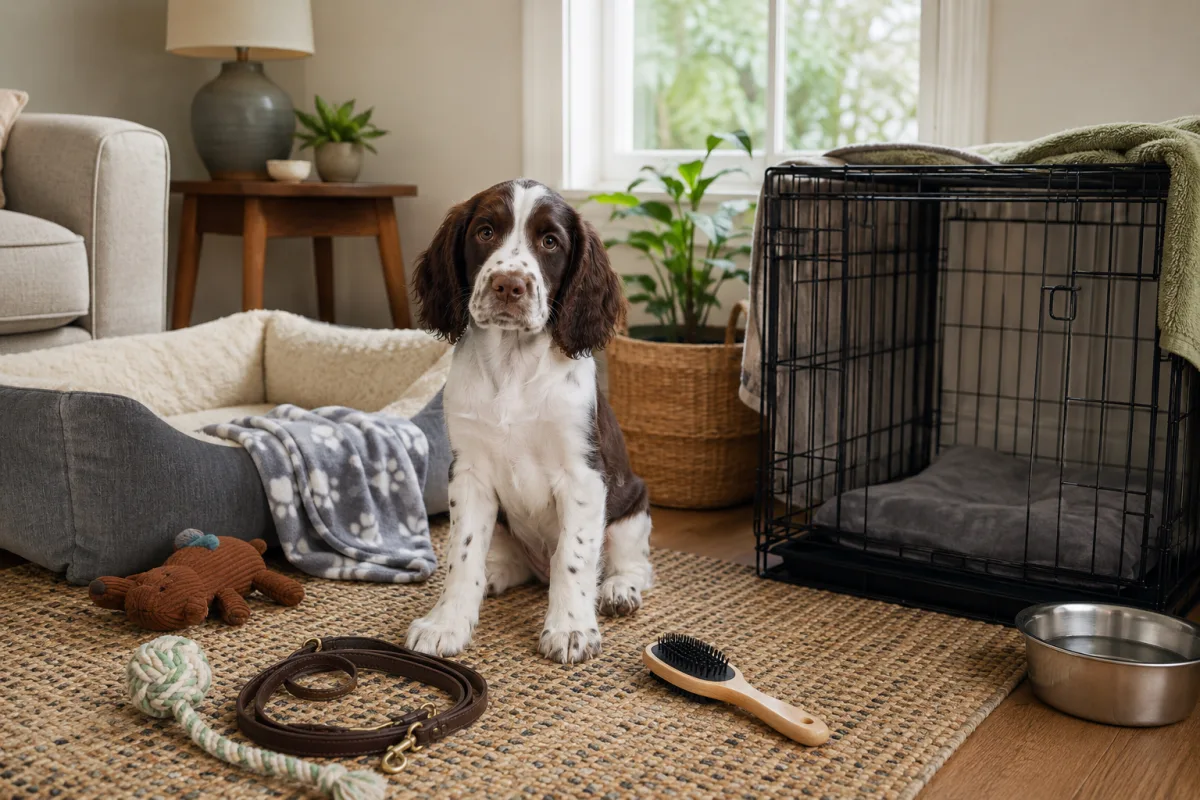
The first month should be structured but not harsh. Set up a crate, gates, chew toys, a predictable potty routine, short training sessions, and calm introductions. Do not run a young puppy into exhaustion because the breed is athletic. Growth plates, attention span, and emotional development still matter.
Plan for ears, coat, and feet from the start. Handle paws gently, look in ears, brush lightly, reward calm standing, and keep sessions short. Introduce water and field work carefully if that is part of your plan. A Springer can love swimming and retrieving, but enthusiasm still needs safety and training.
A good breeder wants updates and should be willing to take the dog back if life changes. That safety net is one of the marks of responsible breeding. The sale is not the end of the relationship; it is the beginning of the part where the puppy has to become a sane adult.
Frequently Asked Questions
Are English Springer Spaniels good family dogs?
They can be excellent family dogs in active homes that provide training, exercise, grooming, and enough people time. They are not a low-effort breed.
What health tests should a Springer breeder show?
Ask about hips, elbows, eyes, cardiac exams, and relevant DNA tests such as PRA and PFK. Ask to see registered results for the sire and dam.
Is a field Springer different from a show Springer?
Often, yes. Field lines may be more driven and athletic, while bench lines may have more coat and different structure. Individual temperament still matters.
Should I choose the calmest puppy?
Not automatically. A sleepy puppy may only be tired. Let the breeder help match temperament, activity level, confidence, and sensitivity to your household.
What is a breeder red flag?
Missing health records, pressure to pay fast, no questions about your home, vague parent information, and refusal to discuss return policy are all warning signs.
Owning an English Springer Spaniel starts before the puppy comes home. Choose a breeder who treats health, temperament, purpose, and long-term support as part of the same conversation.

Chiara Bradshaw
Covers education, culture and creative topics with an emphasis on readable explanations and verifiable references.




Leave a reply
Replying to