
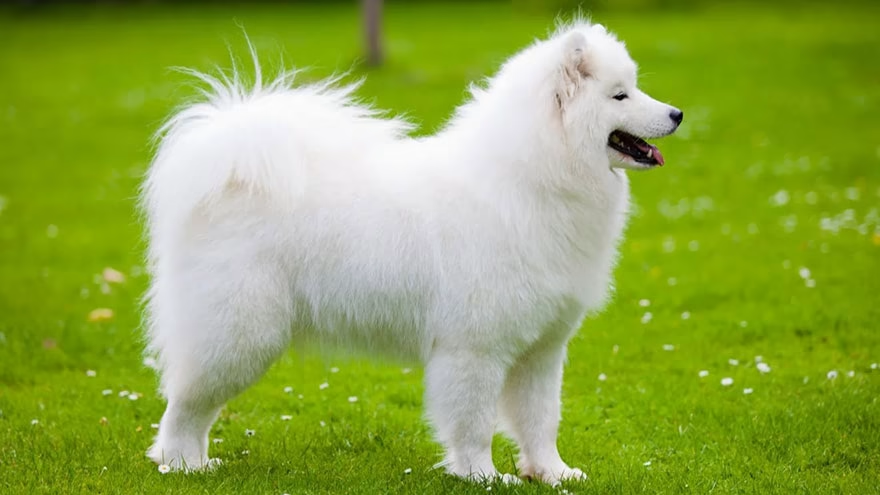
A Samoyed looks cheerful even when it is asking a lot from the household. The smile, white coat, and friendly expression can hide the real work: shedding, heat management, exercise, barking, grooming, and training a social northern dog. These Samoyed common questions help separate the beautiful photo from the daily routine.
The breed can be an affectionate family companion, but it is not low maintenance. A Samoyed needs people, brushing, cool resting places, daily activity, and patient training. If you want the coat but not the coat care, choose another breed before the puppy changes your life.
A good Samoyed home plans around the dog before the dog arrives. That means deciding where grooming happens, how summer exercise will be adjusted, who handles daily walks, and how barking will be managed in the neighborhood. This breed often fails in homes that love the look but have no routine. It does better with owners who are steady, active, and willing to clean hair from everything they own.
Are Samoyeds Good Family Dogs?
The American Kennel Club describes the Samoyed as powerful, tireless, and covered in a thick white coat built for cold. Many Samoyeds are friendly and people-oriented, which makes them appealing family dogs. That friendliness still needs supervision around children, especially during puppy jumping, food time, and grooming.
Teach children not to pull coat, climb on the dog, wake it suddenly, or chase it into a corner. A friendly dog still needs space. If you are comparing family dog temperament across breeds, Livecub's Basset Hound questions show how different breeds package sociability, stubbornness, and household pace.
Because many Samoyeds are social, families sometimes let greetings get too wild. Start with calm entry routines, reward sitting for attention, and give the dog a place to retreat during loud visits. A happy Samoyed can overwhelm guests through enthusiasm alone. The goal is not to flatten the personality; it is to teach the dog how to be friendly without launching into every person.
How Much Grooming Does A Samoyed Need?
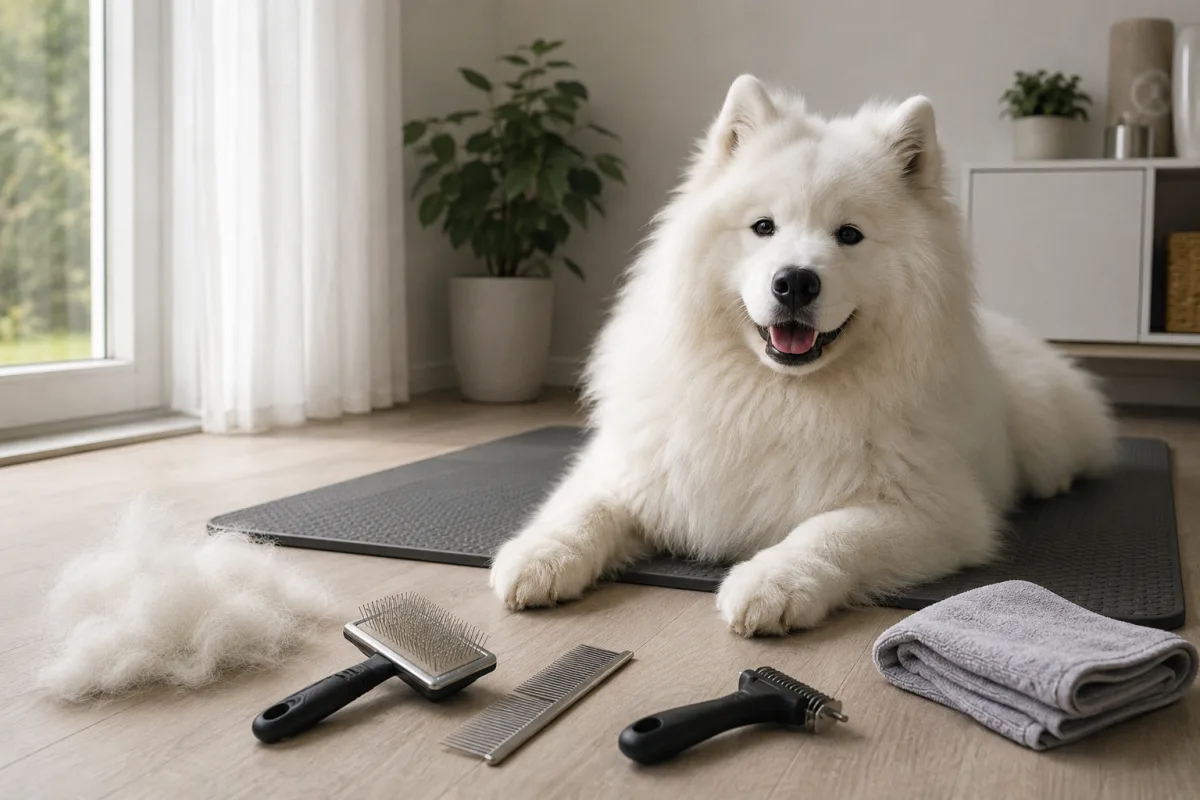
Grooming is the core Samoyed task. The Samoyed Club of America explains that brushing helps remove soil and that the coat can be kept cleaner between baths with foot washing, towel rubs, and daily attention. That is not the same as a quick surface brush.
Use a pin brush, slicker, comb, and undercoat tools carefully. Work in layers and check behind ears, under the collar, pants, armpits, and tail base. A groomer can help, but home brushing is still required. For another coat-care comparison, Livecub's longhair Dachshund grooming guide shows why brushing has to reach the skin.
Set up grooming like a small household system. Keep tools in one place, use a nonslip surface, reward short cooperative moments, and stop before the dog is fed up. A twenty-minute session done several times a week beats a two-hour battle after mats appear. Check skin while you work. Hot spots, burrs, ticks, and weight gain can hide under the coat, especially when the dog looks clean from a distance.
Do Samoyeds Shed A Lot?
Yes. Samoyeds shed regularly and blow coat seasonally. The Samoyed Club of America notes that Samoyeds shed heavily during full coat release, and owners should expect a lot of hair. If a seller tells you the breed barely sheds because the coat is special, walk away.
During coat blow, short daily sessions work better than one long battle. Use grooming as training: stand on a mat, accept combing, reward stillness, and stop before the dog becomes sour. Shedding is not a defect in this breed; it is part of owning it.
Hair management also means managing the house. Wash bedding, use washable throws, keep a vacuum that can handle undercoat, and accept that black clothing will tell the truth. People who need a spotless home may resent the breed. People who build cleaning into the routine usually handle the shedding with less drama.
How Much Exercise Does A Samoyed Need?
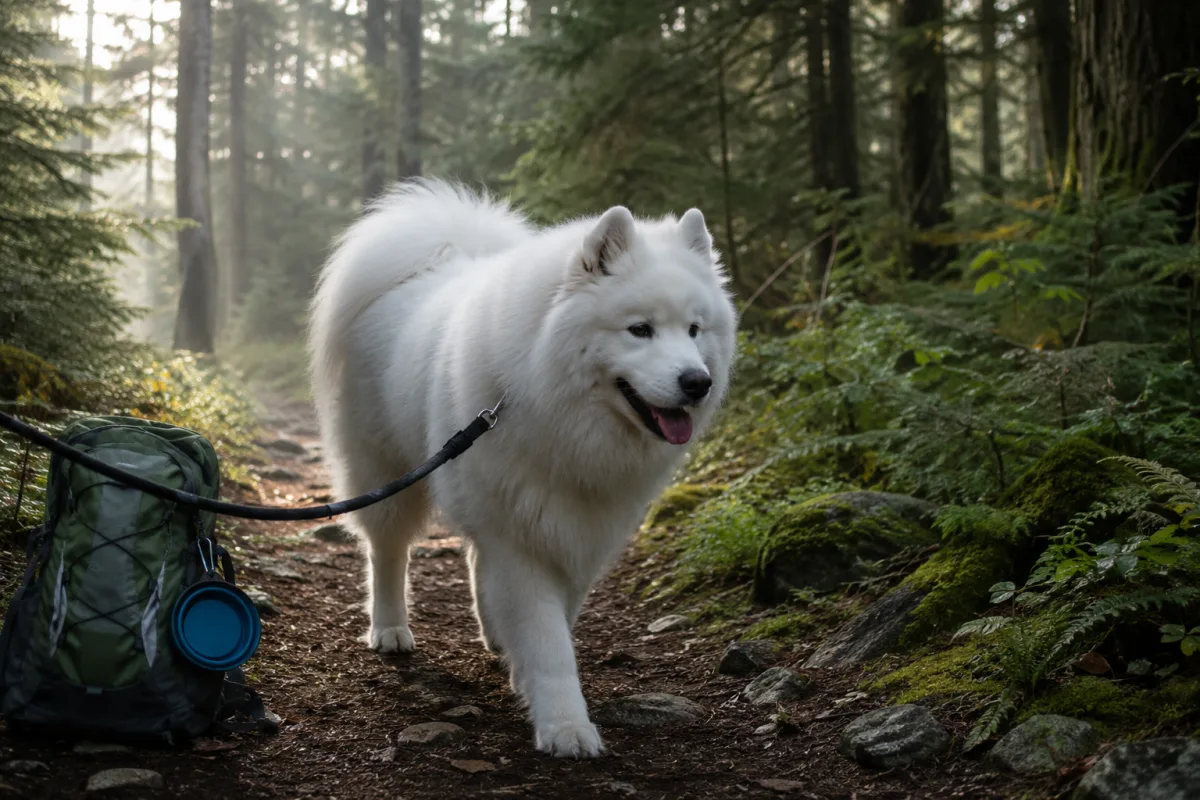
VCA says Samoyeds need a moderate walk or jog, a good run in an enclosed area, and games or tricks for mental exercise. That does not mean every dog needs endless hard running. It means boredom shows up quickly when the dog has no work.
Mix walks, sniffing, training games, tug with rules, safe pulling activities, and rest. Avoid repetitive forced running for puppies. In warm weather, shift activity to early morning or late evening. If you like active breeds but want a different drive profile, Livecub's German Shorthaired Pointer questions can help compare exercise needs.
Exercise needs change with season and age. A winter walk may be easy for the dog and hard for the owner; a summer walk may be the reverse. Watch recovery, not just distance. A Samoyed that comes home frantic may need more mental work, while one that lies down in shade may be telling you the heat is too much. Training games can tire the brain without overheating the body.
Can Samoyeds Handle Hot Weather?
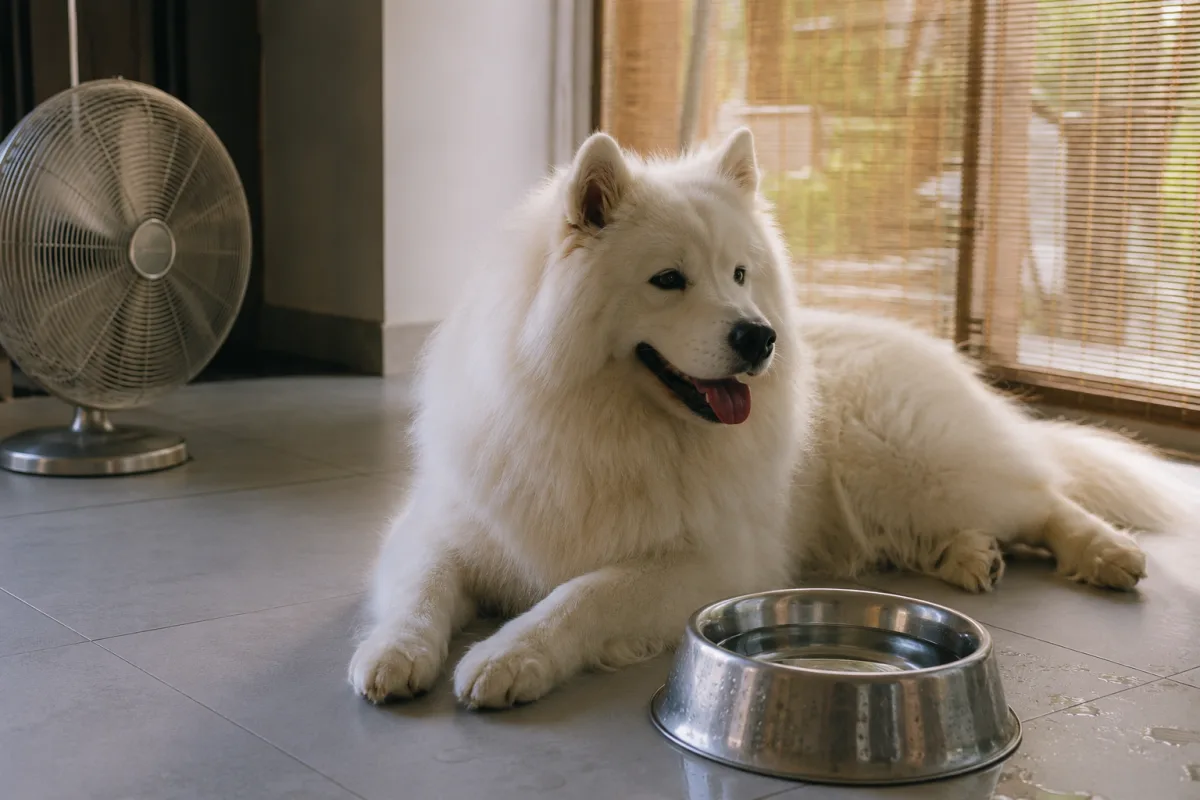
Heat is a serious management issue. VCA notes that Samoyeds are usually happier in air-conditioning in warm weather. The coat protects in cold, but it does not make summer risk disappear. Use shade, water, cool floors, fans, and early walks.
Do not shave the coat as a summer shortcut. A clean, brushed coat and a cool environment are safer than removing coat structure. Watch for heavy panting, weakness, glassy eyes, vomiting, or stumbling. If overheating is suspected, contact a veterinarian quickly.
Are Samoyeds Easy To Train?
They are intelligent and social, but they can also be independent and vocal. Use reward-based training, short sessions, and clear routines. Teach recall, quiet, leash walking, place, grooming cooperation, and calm greetings early. A Samoyed that gets attention for barking may decide barking is a profession.
Social isolation is a poor fit. Many Samoyeds want to be near their people. If left alone too long without training or enrichment, they may bark, dig, chew, or pace. If you are weighing other small-but-vocal breeds too, Livecub's Miniature Schnauzer questions show why alert behavior needs an off switch.
Vocal management should start before neighbors complain. Reward quiet after a door sound, block window rehearsals if they trigger barking, and avoid shouting over the dog. Teach a cue for going to a mat when visitors arrive. A Samoyed will often talk because talking works. If barking brings attention every time, the dog learns the schedule faster than the owner does.
What Health Questions Should Owners Ask?
Ask breeders about hips, eyes, inherited diseases, thyroid, diabetes risk, and OFA/CHIC records. The Samoyed Health Foundation notes that CHIC requirements include genetic tests for X-linked progressive retinal atrophy and retinal dysplasia/oculoskeletal dysplasia 2. Do not buy on coat and smile alone.
Veterinary care should include weight checks under the coat, dental care, parasite prevention, and ear and paw checks after outdoor activity. A thick coat can hide skin irritation and weight gain. Written records help you notice changes before they become expensive problems.
Ask a breeder what they see in older relatives, not only what the puppy looks like at eight weeks. Longevity, temperament, thyroid history, eye results, hip records, and coat quality in adult dogs all matter. A careful breeder should also ask you questions about grooming, climate, work schedule, and training plans. That interview protects the puppy as much as the buyer.
Frequently Asked Questions
Are Samoyeds hypoallergenic?
No dog is truly hypoallergenic. Samoyeds shed heavily, so allergic people should spend time around the breed before committing.
Do Samoyeds bark a lot?
They can be vocal, especially when bored or lonely. Training, exercise, and managed windows or yard time help.
Can Samoyeds live in apartments?
Sometimes, if cooling, exercise, grooming, barking management, and neighbor tolerance are handled. Many apartments are hard for the breed.
Should you shave a Samoyed?
Usually no. Brush out loose undercoat, keep the dog cool, and work with a groomer familiar with double coats.
Are Samoyeds good for first-time owners?
They can be, but only for owners ready for grooming, exercise, training, and heat management from the start.
Is A Samoyed Right For You?
Choose a Samoyed if you want a social, active, cold-weather dog and will treat grooming and cooling as part of daily care. Skip the breed if you want low shedding, low noise, or casual summer exercise. The smile is real. So is the work.

Chiara Bradshaw
Covers education, culture and creative topics with an emphasis on readable explanations and verifiable references.



Leave a reply
Replying to