
Choose a Family Dog by Fit, Not by a Cute List
The best dog breeds for families are the breeds whose needs match the people in the house. A calm family in an apartment, a loud household with toddlers, and an outdoorsy family with teenagers should not all pick the same dog because a list said the breed is good with kids.
Breed traits matter, but individual dogs matter too. Age, socialization, training, health, breeder quality, rescue history, and daily routine can change the experience. A good family dog is not only friendly. It is manageable in your actual life.
The right dog is the one your family can care for every ordinary day.
What Makes a Dog Family-Friendly
The American Kennel Club's guide to best family dogs points readers toward lifestyle, home, and children's ages instead of treating every household as the same. That is the right starting point.
Look for a dog with a stable temperament, trainability, tolerance for household noise, suitable energy, and grooming needs you can maintain. Also look at size. A giant dog may be gentle but still knock over a toddler. A tiny dog may be sweet but fragile around rough play.
If your family is drawn to small breeds, Livecub's Maltese questions and Lhasa Apso questions can help compare coat care and personality expectations.
Labrador Retriever
Labrador Retrievers are popular family dogs because many are social, trainable, food-motivated, and active without being fragile. They often fit families that want a dog for walks, games, swimming, fetch, and basic obedience practice.
The tradeoff is energy. A young Lab that does not get exercise and training may jump, mouth, steal food, or crash through the house. Families should plan daily walks, play, training, and safe chew options. Labs are not low-effort furniture.
A friendly dog still needs structure.
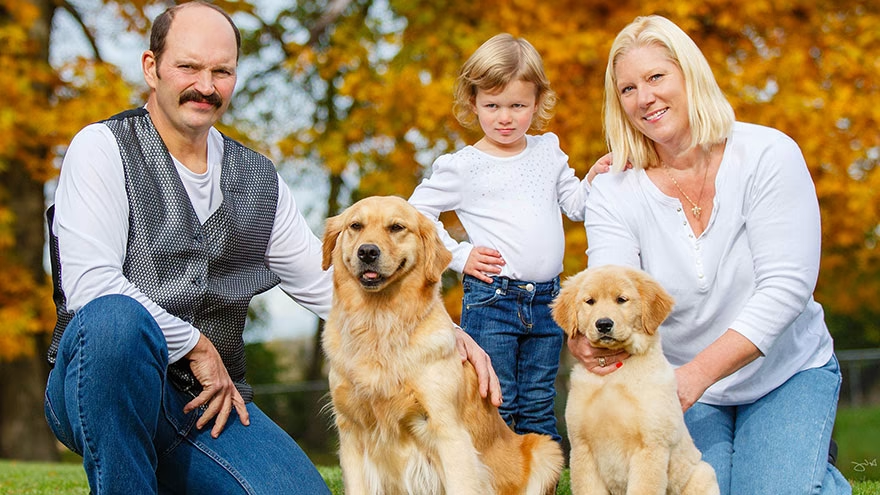
Golden Retriever
Golden Retrievers are often affectionate, people-focused, and eager to work with their families. They can be excellent with children when trained and supervised. Their softness is part of the appeal, but they still need clear boundaries.
Expect shedding, grooming, exercise, and attention. A bored Golden may invent jobs, carry items around, or become pushy for contact. Families who want a close companion and can handle coat care may find the breed a strong match.
Beagle
Beagles can suit families that like a sturdy, social, medium-small dog with a cheerful personality. They are often playful and food-driven, which can make training fun. Their size is practical for many homes.
The nose is the challenge. A Beagle may follow scent before listening, so secure yards, leashes, and patient training matter. They can also be vocal. If your household cannot handle barking, choose carefully.
For a different scent-hound profile, Livecub's Basset Hound questions can help families think about ears, joints, scent drive, and pace.
Poodle and Poodle Mixes
Standard and Miniature Poodles can be smart, active, and trainable family companions. Many families also consider Poodle mixes because of coat hopes, but no mix guarantees one exact coat or temperament. Meet the actual dog and ask real questions.
Poodles need grooming and mental work. A neglected coat mats. A bored smart dog can become noisy or demanding. The upside is that many enjoy training, games, and structured family activity.
Cavalier King Charles Spaniel
Cavaliers are often gentle, affectionate companion dogs. They may fit quieter families that want a smaller dog who enjoys laps, walks, and close contact. They are usually not the right match for rough play or children who cannot respect a small dog's body.
Health research is essential with this breed. Ask breeders about heart, eye, and orthopedic screening, or talk honestly with a rescue about medical needs. A sweet temperament does not remove the need for careful health planning.
Boxer
Boxers can be playful, loyal, and fun-loving with families that enjoy a goofy, energetic dog. They often love people, but their strength and enthusiasm can overwhelm small children if training is loose.
Choose a Boxer only if the family can teach calm greetings, leash manners, and settling skills. Exercise matters, but so does impulse control. A tired Boxer with no manners is still a lot of dog.
Big personality needs big consistency.
Sporting Breeds for Active Families
Families who hike, run, train, or spend time outdoors may consider sporting breeds. German Shorthaired Pointers and Brittanys can be rewarding for active households, but they are not casual choices. They need movement, training, and a job for the brain.
Livecub's German Shorthaired Pointer questions and Brittany breeder recommendations are useful starting points before bringing home a high-energy dog.
Small Breeds Need Protection Too
Small dogs are sometimes treated like toys by children, which is unfair and unsafe. Teach children to let the dog approach, avoid grabbing, and respect beds, crates, food, and sleeping time. A small bite can still hurt, and a small dog can be injured by careless handling.
Miniature Schnauzers, Maltese, and similar smaller breeds may fit some families, but grooming, barking, training, and fragility should be discussed honestly. Livecub's Miniature Schnauzer questions can help with that comparison.
Safety With Children
The American Veterinary Medical Association's advice on selecting a pet for your family urges households to consider family, home, and lifestyle carefully. The AVMA also emphasizes dog-bite prevention, including supervision around children.
No breed should be left alone with young children. Teach children not to hug dogs tightly, climb on them, bother them while eating, or corner them. Teach adults to watch body language: turning away, lip licking, yawning, freezing, whale eye, growling, and hiding are all information.
Good family dogs still deserve adult supervision.
Adoption, Breeders, and Real Questions
If adopting, ask how the dog behaves around children, food, other pets, noise, visitors, and handling. Ask what the shelter or temporary home has observed, not what everyone hopes. If buying from a breeder, ask about health testing, temperament, socialization, and return support.
Avoid anyone who sells only through pressure, refuses questions, or says every puppy is perfect for every family. The honest answer is often more valuable than the easy answer.
Match the Dog to the Daily Schedule
Before naming a breed, write down a normal weekday. Who walks the dog before school or work? Who handles midday needs? Who trains the puppy when the children are at activities? Who cleans the crate, schedules vet visits, and manages food?
A breed that looks perfect on Saturday may be wrong on Wednesday. High-energy breeds need outlets when the weather is bad and everyone is busy. Companion breeds may struggle when left alone for long stretches. Families should choose for the repeated day, not the best day.
The schedule is where breed choice becomes real.
Grooming, Allergies, and House Rules
Some family dogs shed heavily. Some need professional grooming every few weeks. Some drool, track mud, bark at the window, or carry toys through every room. None of these habits is automatically a problem, but they should be discussed before the dog arrives.
If anyone has allergies, spend time around the breed or similar coat type before committing. No dog is a perfect allergy guarantee. Cleaning, grooming, air filters, and sleeping arrangements may all matter.
A family dog changes the house, not only the family photo.
Training Should Start Early
Family dogs need practical training: coming when called, leaving food, walking on leash, settling on a mat, greeting politely, and releasing stolen objects. These skills make everyday life safer and calmer.
Use reward-based training and short sessions that children can watch. Adults should manage the training plan, while children can help with simple cues under supervision. A dog should not have to learn rules from inconsistent children.
When a Breed Is Not the Right Fit
Sometimes the best decision is choosing a different breed or waiting. If the household has no time for exercise, cannot afford vet care, has children who cannot follow safety rules, or needs a dog to tolerate constant chaos, pause the search.
Waiting is not failure. It can prevent a stressful match for the dog and the family. The right time matters as much as the right breed.
Frequently Asked Questions
What is the best dog breed for families with kids?
There is no single best breed. Labrador Retrievers, Golden Retrievers, Poodles, Beagles, and some spaniels often work well, but fit depends on the household.
Are small dogs better for children?
Not always. Small dogs can be fragile and may dislike rough handling. Match size, temperament, and child behavior.
Should families adopt an adult dog or get a puppy?
Both can work. Adult dogs may have more known behavior, while puppies need more training, supervision, and time.
Can any dog be trusted alone with children?
No. Young children and dogs should be supervised, even when the dog is familiar, gentle, and well trained.

Timothy Davidson
Edits step-by-step general-interest guides for clarity, realistic limits and source verification.



Leave a reply
Replying to