
Pilates Classes Differ More Than the Name Suggests
The styles of Pilates classes can feel very different from one studio to another. One class may be quiet mat work. Another may be a fast reformer session. Another may focus on rehab, athletic conditioning, or classical order.
Cleveland Clinic's Pilates overview describes Pilates as low-impact exercise focused on controlled movement, core strength, and posture. That shared foundation still leaves plenty of room for different class styles.
The right class depends on your body, goals, and preferred pace.
Mat Pilates
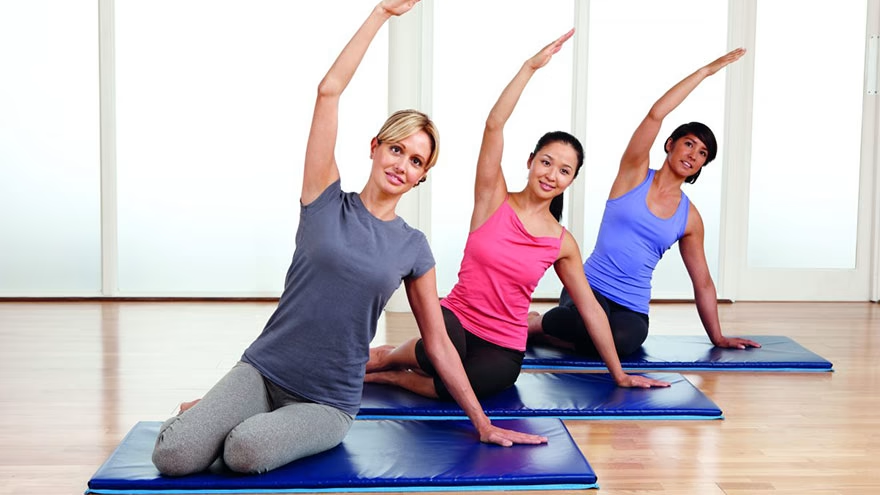
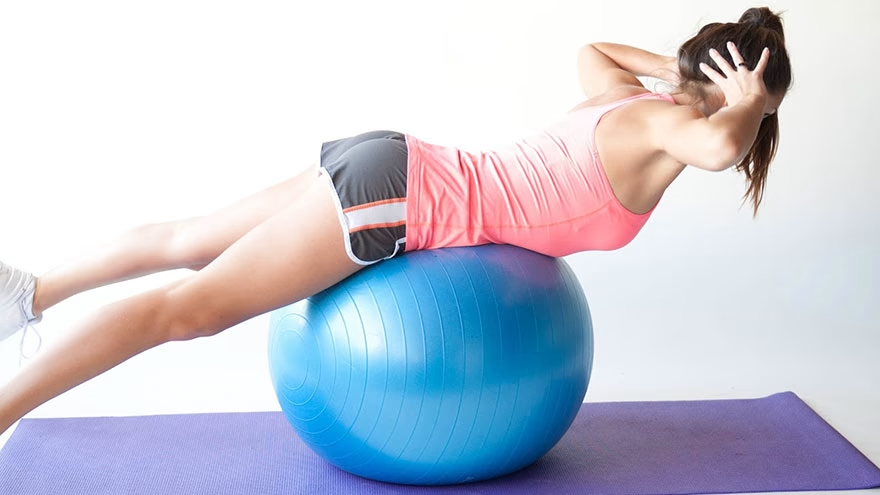
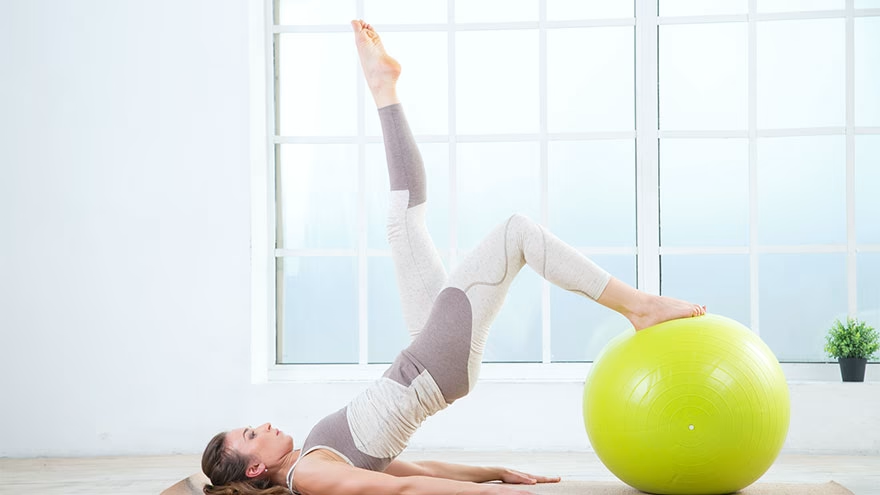
Mat Pilates is the most accessible style because it needs little equipment. Classes use body weight, floor positions, breathing, alignment, and controlled transitions. Some teachers add rings, bands, balls, blocks, or light weights.
Mat classes can be gentle, technical, or very challenging. Beginners often learn the language of Pilates here: neutral spine, pelvic position, breath, control, and core engagement.
If you are comparing movement styles, Livecub's Pilates or Tai Chi article gives another view of controlled, lower-impact training.
Reformer Pilates
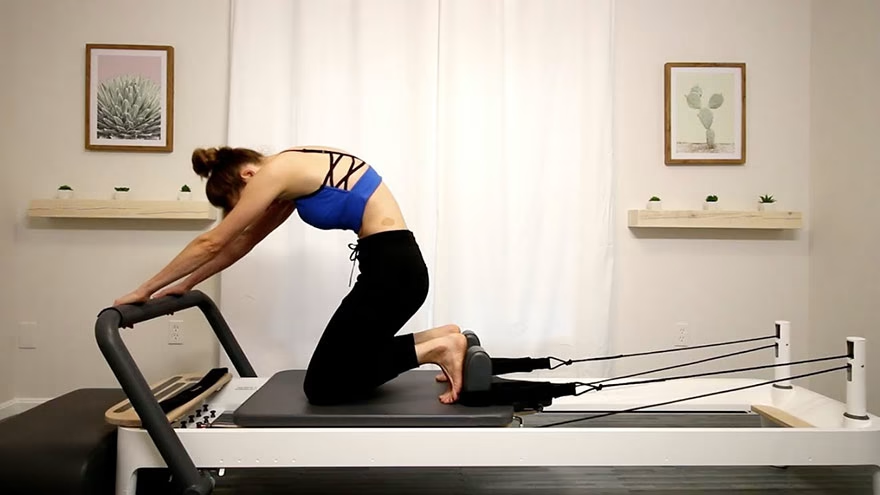
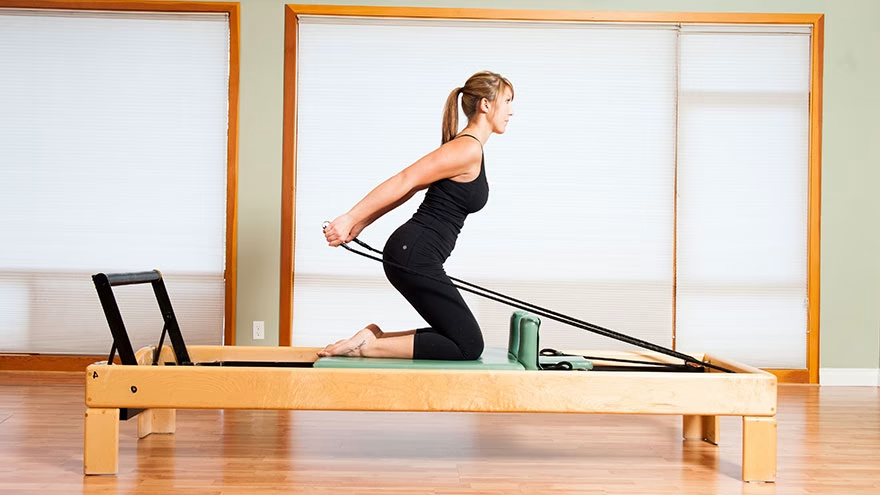
Reformer Pilates uses a moving carriage, springs, straps, pulleys, and a footbar. The springs can assist a movement, challenge it, or expose where control is missing. This makes reformer classes feel precise and adjustable.
Some reformer classes are slow and technical. Others are athletic and rapidly changing. Do not assume every reformer class is beginner-friendly just because the machine looks supportive.
Balanced Body's Pilates equipment overview is useful for understanding how equipment changes the method without changing the need for control.
Livecub's jump board guide shows one way reformer work can become more dynamic.
Classical and Contemporary Pilates
Classical Pilates usually stays close to the original exercise order and teaching tradition associated with Joseph Pilates. Students may repeat a familiar sequence and refine it over time.
Contemporary Pilates uses the same roots but often includes modern exercise science, modifications, props, and varied programming. It may feel more adaptable for different bodies or goals, depending on the teacher.
Neither style is automatically better. Classical work can build discipline and continuity. Contemporary work can offer options and updated cueing. The teacher matters as much as the label.
Level Names Are Not Universal
One studio's beginner class may feel like another studio's intermediate class. Labels such as all-level, open-level, flow, power, essentials, athletic, restore, and fundamentals are not standardized across the industry.
Read the description and ask questions. Does the class teach setup? Are modifications offered? Is prior reformer experience required?
Ask about group size too. Those answers tell you more than the class name alone.
Beginner-friendly should mean actively taught, not merely slower.
Tower, Cadillac, Chair, and Barrel Classes
Some studios offer equipment beyond the reformer. Tower and Cadillac work use springs, bars, and straps for supported or resisted movement. Chair classes use a compact piece of equipment with pedals and springs. Barrels support extension, mobility, and spinal work.
These classes can be excellent, but they may require more instruction because the equipment is less familiar. Ask whether the class is open-level or meant for students with prior experience.
Equipment names can sound intimidating. What matters is whether the class gives you clear setup, safe transitions, and enough attention from the instructor.
Private, Semi-Private, and Group Classes
Private sessions give the most individual attention. They are useful for beginners, people returning after injury, athletes with specific goals, or anyone who wants detailed feedback. They also cost more.
Semi-private classes usually include two to four students. They can balance attention and price. Larger group classes are often more affordable and social, but they leave less time for individual correction.
If you need to understand exercise setup carefully, Livecub's Polar chest strap battery guide is unrelated to Pilates technique but reflects the same lesson: details matter when equipment is involved.
Teacher Style Changes the Class
Two teachers can use the same reformer sequence and create very different experiences. One may cue anatomy and alignment. Another may use imagery. Another may keep the class moving with music and quick transitions.
Pay attention to whether the teacher watches the room, offers modifications, explains springs and setup, and creates a class where students can ask questions. A polished playlist does not replace safe instruction.
A good instructor makes the method understandable.
Athletic, Cardio, and Fusion Pilates
Some classes use Pilates language but add faster transitions, music, light weights, jump boards, barre moves, or cardio intervals. These classes may feel fun and sweaty, but they may not spend as much time on form.
The American Council on Exercise's Pilates overview emphasizes controlled movement and core-focused work. If a fusion class loses control completely, it may be drifting away from the method.
For readers comparing higher-intensity options, Livecub's running bleachers benefits article shows a very different kind of conditioning.
Clinical, Rehab-Informed, and Gentle Pilates
Gentle or rehab-informed Pilates may be slower, smaller, and more focused on breathing, range of motion, and pain-free control. It can be helpful for people who want careful movement rather than a hard workout.
Look for teacher qualifications, intake questions, and willingness to modify. If you have a medical condition, recent surgery, pregnancy-related concerns, or persistent pain, ask a qualified clinician what is appropriate before starting.
Gentle does not mean pointless. It can be exactly the right level when the goal is control, confidence, and consistency.
What to Expect in Your First Class
Arrive early so you can sign forms, mention injuries or concerns, and learn the equipment setup. Wear clothes that let you move without getting caught in springs, straps, or pedals. Bring socks if the studio requires them.
Expect some unfamiliar language. You may hear cues about neutral spine, imprint, breath, powerhouse, tabletop, articulation, or scapular stability. You do not need to master everything in one session.
After class, notice how you feel later that day and the next morning. Mild muscle soreness can happen, but sharp pain, joint irritation, or dizziness means you should ask for modification or choose a different class level.
How to Choose a Pilates Class
Read the class description carefully. Look for level, equipment, pace, group size, prerequisites, and whether the class is classical, contemporary, athletic, or gentle. If the description is vague, contact the studio.
Beginners should start with an intro class, beginner mat class, or private session if budget allows. Do not jump into a fast open-level reformer class just because the time slot is convenient.
If you want more aerobic vocabulary before choosing classes, Livecub's basic aerobic steps article can help separate cardio-style training from Pilates control work.
A good first class should leave you curious, not confused or injured.
When to Change Class Styles
Change styles when your goals change or when the current class no longer fits. A mat class may be perfect while you learn control, then a reformer class may help you explore resistance. A private session may help after a break.
You may also need a different class if the pace is too fast, the teacher does not offer modifications, the equipment feels rushed, or the class leaves you anxious rather than focused.
Pilates should challenge you, but it should also make movement clearer over time. If the class only feels confusing, the style may not be wrong; it may simply be wrong for you right now.
Use Trial Classes Wisely
Many studios offer intro packages or trial classes. Use them to compare teaching style, cleanliness, equipment setup, class size, and how the instructor handles new students. Do not judge only by how sore you feel afterward.
After each trial, write down what worked and what felt off. The best choice is usually the class you can attend consistently with good form and enough confidence to keep learning.
If two classes seem similar, choose the one where the teacher notices details and explains corrections clearly without rushing the room or ignoring beginners during transitions and equipment setup.
Frequently Asked Questions
What is the easiest Pilates class for beginners?
A beginner mat class, intro reformer class, or private session is usually the best starting point.
Is reformer Pilates harder than mat Pilates?
It can be, but not always. The teacher, pace, resistance, and class level matter more than equipment alone.
What is classical Pilates?
Classical Pilates follows the traditional exercise order and teaching approach more closely than many contemporary classes.
How do I choose a Pilates class?
Match the class level, equipment, pace, group size, and teacher style to your experience, goals, and comfort.

Chiara Bradshaw
Covers education, culture and creative topics with an emphasis on readable explanations and verifiable references.
Leave a reply
Replying to