
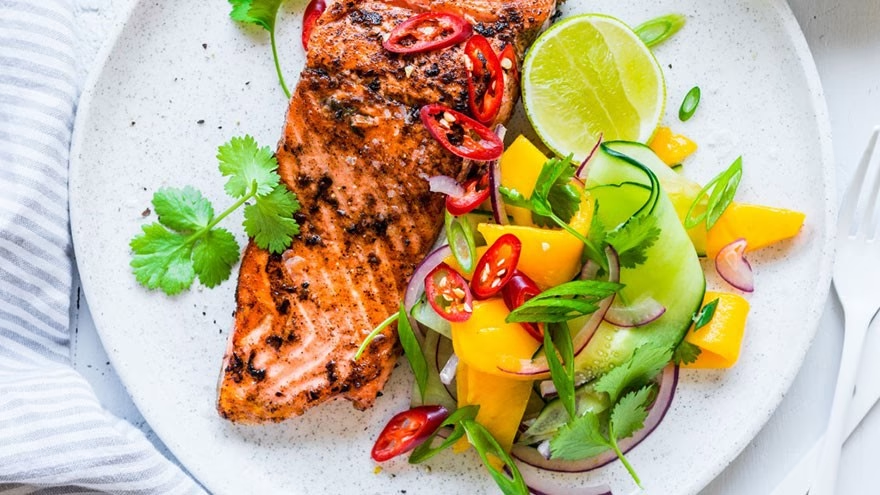
Salmon crepes in silky lemon lime chiffon sauce sound more delicate than they need to be. The dish is really three manageable parts: thin savory crepes, cooked salmon flakes, and a light citrus sauce made creamy with yogurt or sour cream. The trick is pacing. Make the crepes first, cook the salmon gently, then warm the sauce without boiling it into a broken mess.
This recipe works for brunch, lunch, or a light dinner. It looks dressed up on the plate but does not require restaurant equipment. The flavor should be bright, creamy, and clean, not heavy. Lemon and lime lift the salmon; herbs and a little butter make the crepes feel finished.
Ingredients For Salmon Crepes
For the crepes, use 2 large eggs, 1 cup milk, 3/4 cup all-purpose flour, 2 tablespoons melted butter, a pinch of salt, and 1 tablespoon chopped dill, chives, or parsley if you want a savory herb note. For the filling, use about 12 ounces cooked salmon, flaked; 1 tablespoon butter; 1 small shallot, finely minced; 1 tablespoon lemon juice; 1 teaspoon lime zest; and a little black pepper.
For the silky lemon lime chiffon sauce, use 1/2 cup plain Greek yogurt or sour cream, 2 tablespoons mayonnaise if you want more body, 1 tablespoon lemon juice, 1 tablespoon lime juice, 1 teaspoon honey, 1 teaspoon Dijon mustard, 1 tablespoon chopped dill or chives, and salt to taste. The word chiffon here is more about the light, silky texture than a classic dessert-style chiffon.
If you already enjoy making savory party bites such as asparagus rolls, this dish uses the same idea at a more polished scale: soft wrapper, flavorful filling, and a sauce that keeps each bite from feeling dry.
Make Tender Savory Crepes
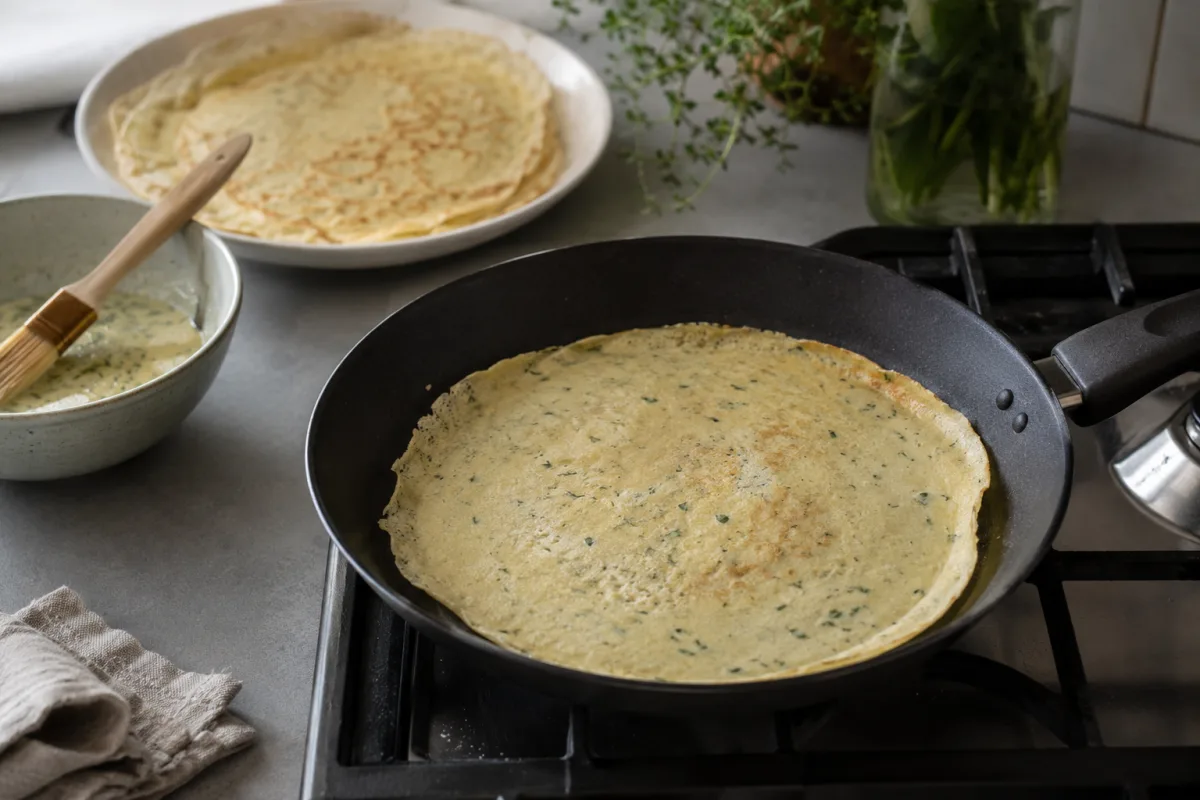
Blend or whisk the eggs and milk first, then add flour, melted butter, salt, and herbs. Whisk until smooth. Let the batter rest at least 20 to 30 minutes so the flour hydrates and bubbles settle. The batter should pour like heavy cream. If it is too thick, add a spoonful of milk. If it is lumpy, strain it.
Serious Eats' basic crepe batter uses eggs, milk, flour, melted butter, and salt, with optional sugar for sweet crepes and herbs for savory crepes. The lesson for this recipe is simple: keep the batter thin, let it rest, and cook in a lightly buttered pan.
Heat a nonstick skillet over medium heat. Brush with a little butter. Pour in just enough batter to coat the bottom when the pan is tilted and swirled. Cook until the top looks set and the edges loosen, then flip briefly. Stack crepes between sheets of parchment or a clean towel. The first crepe often looks odd; consider it a test for pan heat and batter thickness.
Crepes can be made ahead. Cool them, stack with parchment, wrap, and refrigerate for a day. Rewarm gently before filling so they fold without cracking.
Cook The Salmon Safely
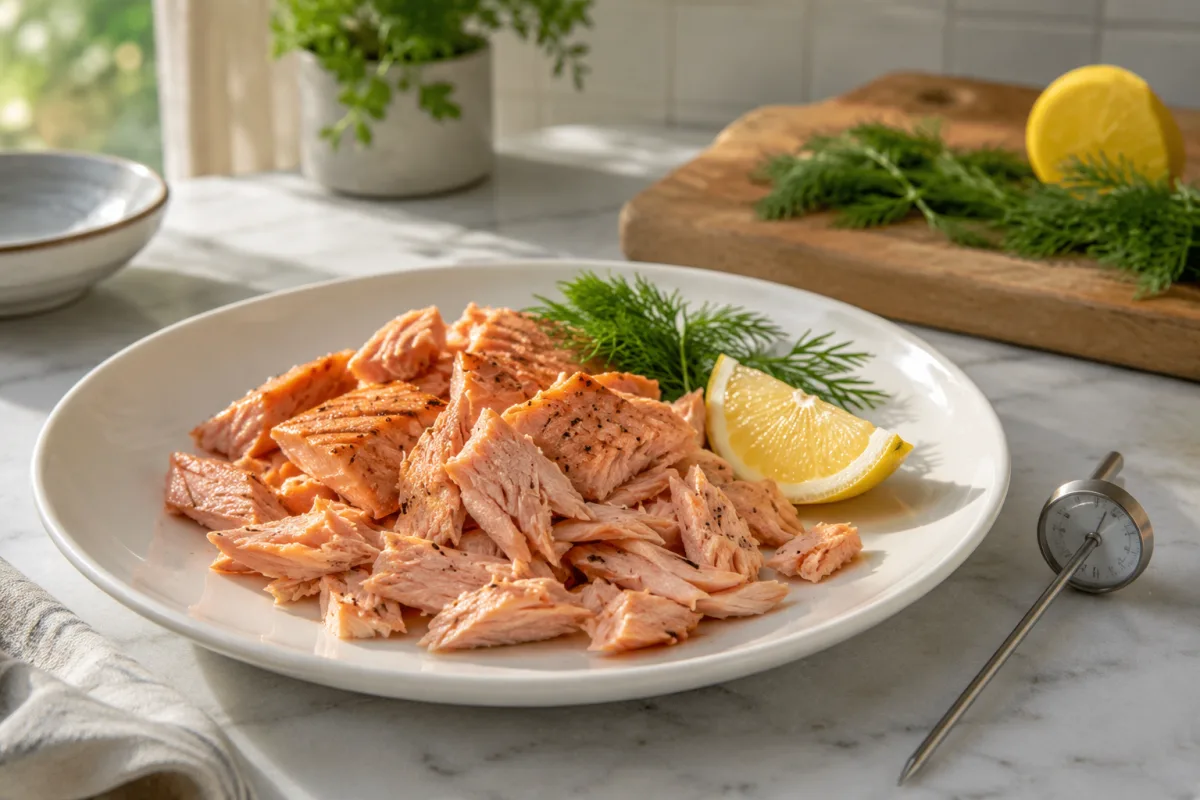
Use fresh or fully thawed salmon. Pat it dry, season lightly with salt and pepper, and bake, poach, or pan-cook until done. For this recipe, you want moist flakes rather than a hard sear. Let the salmon cool slightly, then remove skin and bones if present and flake into large pieces.
FoodSafety.gov lists 145 F for fish such as salmon, or cooking until the flesh is no longer translucent and separates easily with a fork. Use a thermometer if cooking for children, pregnant guests, older adults, or anyone at higher risk from foodborne illness.
The FDA seafood safety guidance advises buying seafood that has been handled safely, checking time and temperature indicators when present, and avoiding questionable packages. For frozen salmon, thaw in the refrigerator, not on the counter.
Leftover cooked salmon can work if it was stored safely and still smells clean. Do not use fish that smells sour, overly fishy, or off. If you want a heartier seafood spread, a recipe like an easy clambake belongs at the casual end of the seafood spectrum; these crepes are quieter and more plated.
Build The Lemon Lime Chiffon Sauce
Stir yogurt or sour cream with mayonnaise if using, lemon juice, lime juice, zest, honey, mustard, herbs, and salt. Taste before heating. It should be tangy but not sharp. If it tastes flat, add a pinch of salt. If it tastes harsh, add a little more yogurt or a tiny bit more honey.
Warm the sauce gently in a small pan over low heat, stirring constantly. Do not boil it. Yogurt-based sauces can separate if overheated. If you prefer a cold sauce, skip the heating entirely and spoon it over warm crepes. That can be especially nice for brunch.
The sauce should coat a spoon lightly. If it is too thick, thin with a splash of warm water or milk. If it is too thin, stir in another spoonful of yogurt. Keep the citrus fresh; bottled juice can taste dull in a simple sauce.
If you like making seasoning blends, a mild herb mix from homemade seasoning work is a reminder to season in layers, but keep this dish away from heavy spice. Salmon and lemon lime sauce need restraint.
Fill, Fold, And Serve
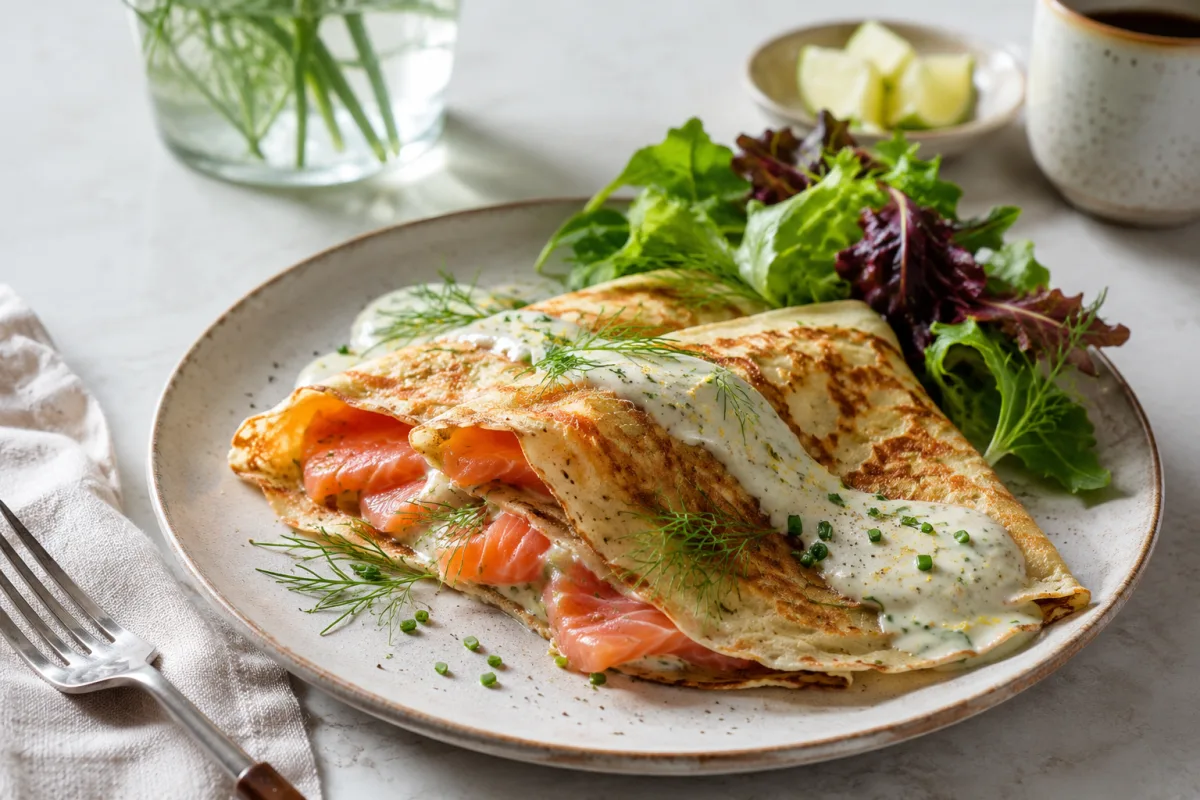
Melt a little butter in a skillet and soften the shallot. Add flaked salmon, lemon juice, lime zest, and pepper. Warm just until the salmon is heated through. Lay a crepe flat, spoon salmon down the center, fold the sides over, and place seam-side down on a warm plate. Repeat with the remaining crepes.
Spoon sauce over the crepes and finish with dill, chives, or thin strips of lemon zest. Serve two small crepes per person for brunch or three for a main dish, depending on size. Add a green salad, roasted asparagus, or a simple fruit plate.
Do not drown the crepes in sauce. The goal is a glossy ribbon, not soup. If serving for guests, keep extra sauce on the side so the plate stays clean.
For a larger brunch menu, pair the crepes with something familiar and mild, such as basic corn souffle, rather than adding three more rich dishes.
Make-Ahead And Leftover Notes
Make crepes up to a day ahead. Cook salmon the day of serving if possible. The sauce can be mixed ahead and warmed gently right before plating. Store the parts separately rather than assembling everything early, because filled crepes can turn soft.
Refrigerate leftovers promptly. Seafood and dairy sauce should not sit out through a long brunch. Reheat gently, and expect the sauce to be less perfect the second time. If the sauce separates, whisk in a spoonful of yogurt or warm water.
If serving this as part of a holiday table with cookies or dessert, keep seafood separate from sweets and craft foods. Something like Christmas cookie ornaments belongs on its own tray, especially if any ornaments are not edible.
If you need to transport the dish, carry the crepes, salmon, and sauce in separate chilled containers and assemble at the destination. That keeps the crepes from soaking up moisture and keeps the sauce from sitting warm for too long. Pack herbs and citrus zest separately too; they look brighter when added at the last minute.
For a buffet, make smaller crepes and fold them once. They hold better on a platter and need less sauce per serving.
Frequently Asked Questions
Can I use smoked salmon in these crepes?
Yes, but use less salt and skip reheating it hard. Smoked salmon works better with a cool or barely warm lemon lime sauce.
Can the crepes be made ahead?
Yes. Stack cooled crepes with parchment, wrap them, and refrigerate for up to a day. Warm gently before filling.
Why did my yogurt sauce split?
It probably got too hot. Warm yogurt-based sauce over low heat and do not boil it. You can also serve the sauce cold.
What temperature should salmon reach?
FoodSafety.gov lists 145 F for fish, or cooking until the flesh is no longer translucent and flakes easily with a fork.
What can I serve with salmon crepes?
A green salad, roasted asparagus, fruit, or a light egg dish works well. Keep sides simple so the citrus sauce stays the focus.
Salmon crepes with lemon lime chiffon sauce feel special because of balance: thin crepes, moist fish, bright sauce, and careful heat. Keep those parts gentle, and the dish stays elegant without becoming fussy.

Cashie Evans
Covers parenting and practical household topics with clear steps, safety notes and links to current guidance.



Leave a reply
Replying to