
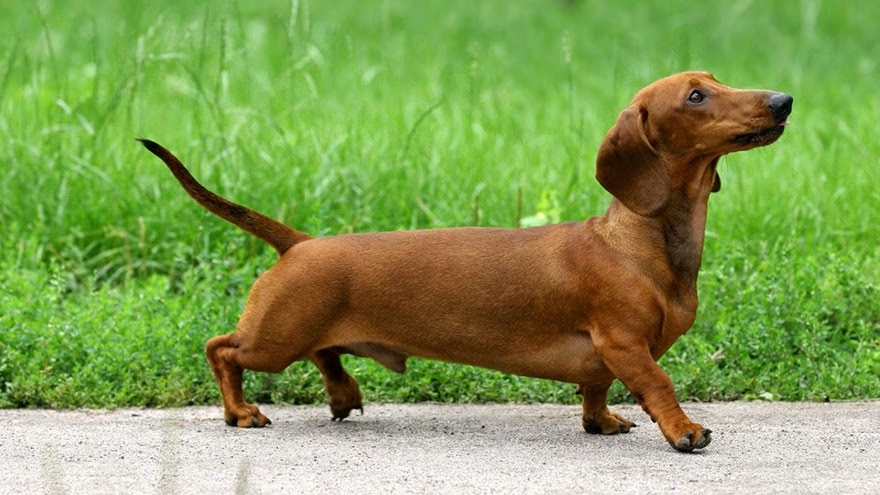
Dachshund questions usually start with the body: why so long, why so low, why so bold, and why does every owner talk about backs? The short answer is that the Dachshund is a hunting breed built for going after badgers, and that famous shape still affects training, exercise, furniture habits, and health. A good owner does not try to remove the breed's confidence. The job is to aim it. These 10 common Dachshund questions cover size, coat, training, barking, children, apartments, exercise, and the back risk every buyer should understand before falling for the silhouette.
What is the Dachshund's background?
AKC describes the Dachshund as a long, low, bold breed that comes in two sizes and three coat types. Its Dachshund breed page is a useful baseline for history, temperament, and varieties. The breed's name points back to badger work, and that background still explains the courage and persistence many owners see at home.
This is not a timid couch ornament by design. A Dachshund may be funny, affectionate, and deeply loyal, but it was not bred to wait politely for every instruction. Training has to respect that independent streak.
People who like scent hounds, including those reading Basset Hound common questions, will recognize the pattern. A nose-driven dog can be affectionate and stubborn in the same minute.
That history also explains why harsh handling backfires. A Dachshund pushed into a battle of wills often becomes louder, sneakier, or less trusting. Calm repetition works better than trying to win every small argument.
How big do Dachshunds get?
AKC describes two sizes: standard and miniature. Standards are usually 16 to 32 pounds, while miniatures are 11 pounds or under. Other registries and countries may use different terms, so ask which standard a breeder is using.
Weight matters because of the spine. A few extra pounds on a long-backed dog are not cosmetic. They add load to joints and discs. Keep the waist visible from above, the ribs easy to feel under light cover, and the food measured.
Lean condition is one of the most practical gifts you can give the breed. It is less exciting than a new toy, but it protects movement every day.
Use a scale more often than your eyes. A thick coat, deep chest, and hopeful expression can make weight creep look harmless. Weigh the dog monthly, adjust treats, and ask the veterinarian what body condition score fits your individual dog.
Are Dachshunds hard to train?
They can be hard to train if the owner expects instant compliance. Dachshunds were bred to make decisions underground, away from a handler's hand signals. That independence can look like stubbornness in a living room.
Use small rewards, short sessions, and clear routines. House training may take patience, especially in cold or wet weather when a low dog has strong opinions about going outside. Crate training, predictable potty trips, and praise for outdoor success help more than scolding after the fact.
Training should also protect the back. Teach ramps, controlled stairs, waiting before being lifted, and calm handling. If you already compare small active breeds, Miniature Schnauzer common questions make a useful contrast: both are clever, but the Dachshund's hunting persistence has its own flavor.
Back-safe manners should be trained before trouble starts. Reward the dog for using a ramp, waiting at furniture, and standing calmly to be lifted with support under chest and rear. It is much easier to teach those habits before pain appears.
What health issue should Dachshund owners watch first?
Intervertebral disc disease, or IVDD, is the health issue most owners should learn early. Cornell explains that intervertebral discs connect vertebrae, allow movement, and protect the spinal cord; in chondrodystrophic breeds, premature hardening of the disc center can lead to degeneration. The explanation is on Cornell's CDDY and IVDD page.
Watch for reluctance to jump, yelping when picked up, a hunched back, weakness, dragging feet, wobbling, sudden paralysis, or loss of bladder control. These signs need a veterinarian quickly. Do not wait to see if a painful back "loosens up."
The Royal Kennel Club's IVDD Scheme for Dachshunds uses X-ray screening and back scoring to help breeders reduce risk. Owners should still focus on daily habits: lean weight, safer furniture access, and avoiding repeated high jumps.
Ask breeders about back history in relatives, not only puppy looks. A careful answer should include health screening, older family members, and what happens if a problem appears later.
Set up the house for the dog you own, not the dog you wish had longer legs. Low ramps, blocked stair access, rugs on slick floors, and lifted food bowls if your vet recommends them can reduce awkward movements. The setup may look fussy until it prevents one bad leap.
How much exercise does a Dachshund need?
Dachshunds need more exercise than their size suggests, but it should be controlled. Walks, sniffing time, gentle hill work, training games, and safe play build muscle that supports the body. Endless jumping, slippery floors, and rough landings are the wrong kind of activity.
Use walking gear that fits well and keeps pressure off the neck. Build stamina slowly. A young dog should not be forced into long runs, and an older dog should not be treated like a puppy because the mind still wants adventure.
Scent work is a good outlet because it lets the dog use the brain without repeated hard landings. Scatter feeding, short tracking games, and "find it" cues can satisfy the hound side while keeping the body under control.
Do not skip warm-ups. A short leash walk before play gives muscles time to loosen, especially in cold weather. Sudden sprinting from a nap to a thrown toy is harder on a long-backed dog than many owners realize.
Owners drawn to big-dog adventure may read lists like the top 10 biggest dog breeds, but Dachshunds prove size is not the same as drive. Small dogs can still need real work.
Which coat type is easiest to live with?
Smooth, longhaired, and wirehaired Dachshunds each have trade-offs. Smooth coats are easiest to wipe clean but still shed. Longhaired dogs need brushing behind the ears, feathering, tail, and belly. Wirehaired coats need coat care that may include hand-stripping or careful clipping depending on the dog and owner's goals.
Coat choice should match the household. If you love grooming, a longhaired dog can be a joy. If you want lower coat work, smooth may be easier. If you want the scruffy terrier look, ask a groomer what wirehair upkeep really costs.
A guide to grooming a longhair Dachshund can help owners see that coat care is not separate from health. Mats, burrs, moisture, and hidden skin irritation all matter.
Coat care also helps handling. A dog accustomed to feet, ears, tail, belly, and mouth checks is easier to examine when something hurts. Pair gentle touch with food rewards before the dog has a reason to guard its body.
Apartment life depends less on floor space and more on noise management. A Dachshund that watches the hallway all day may bark at every footstep. Use curtains, white noise, training rewards, and enough outdoor sniffing to lower the urge to announce every neighbor.
Frequently Asked Questions
Are Dachshunds good with children?
Many are, if children are gentle and supervised. Kids should learn not to lift, squeeze, or chase the dog, because back safety and trust matter.
Can a Dachshund live in an apartment?
Yes, if barking is managed and daily walks happen. The bigger challenge is often stairs, jumping on furniture, and hallway noise.
Do Dachshunds bark a lot?
Many are vocal watchdogs. Teach a quiet cue, manage window triggers, and reward calm before alert barking becomes the dog's full-time hobby.
How long do Dachshunds live?
Many live into their teens with good care. Back protection, lean weight, dental care, exercise, and routine veterinary visits all shape quality of life.
Should Dachshunds use stairs?
Many owners reduce stairs and jumping because of back risk. Ramps, gates, and lifted handling habits are safer than letting the dog launch from furniture all day.
Daily prevention is quiet work. Keep nails short, keep the dog lean, use traction on slippery floors, reward ramps, and call the veterinarian quickly if pain or weakness appears.
The Dachshund is easy to love and easy to underestimate. Respect the back, train the brain, keep the body lean, and you get a small dog with a large amount of character.

Chiara Bradshaw
Covers education, culture and creative topics with an emphasis on readable explanations and verifiable references.

Leave a reply
Replying to