
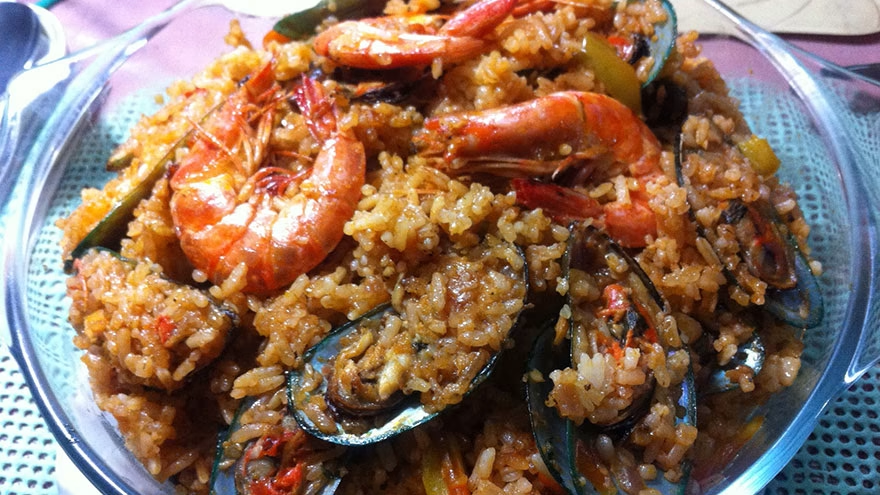
Filipino-style paella is not trying to be a museum copy of Spanish paella. It is a party rice dish shaped by Spanish influence, Filipino ingredients, seafood, chicken, sausage, and the generous table where it usually appears. Learning how to cook paella Filipino style recipe means getting the rice right, building flavor in layers, and keeping the proteins safe and tender.
This version is written for a wide pan, but a large oven-safe skillet or shallow heavy pan can work. The key is to avoid turning the rice into wet risotto or dry pilaf. Paella needs enough liquid to cook the rice, enough heat to set the bottom, and enough restraint that the cook does not stir the grains into paste.
What Makes Filipino Paella Different?
Filipino paella often leans generous: chicken, shrimp, mussels, chorizo or ham, peas, bell peppers, sometimes hard-boiled eggs, and local seasonings. Kawaling Pinoy presents paella as a festive Filipino dish with rice, seafood, chicken, sausage, and vegetables. That spirit is the point. It is a celebratory platter, not a minimalist exercise.
Some Filipino families make arroz a la valenciana, a related rice dish that may use glutinous rice or coconut milk depending on the household. Paella-style versions are usually looser in interpretation and built for gatherings. If you want another Filipino comfort dish beside it, Livecub's Philippines corned beef recipe fits the same home-table mood.
What Ingredients Do You Need?
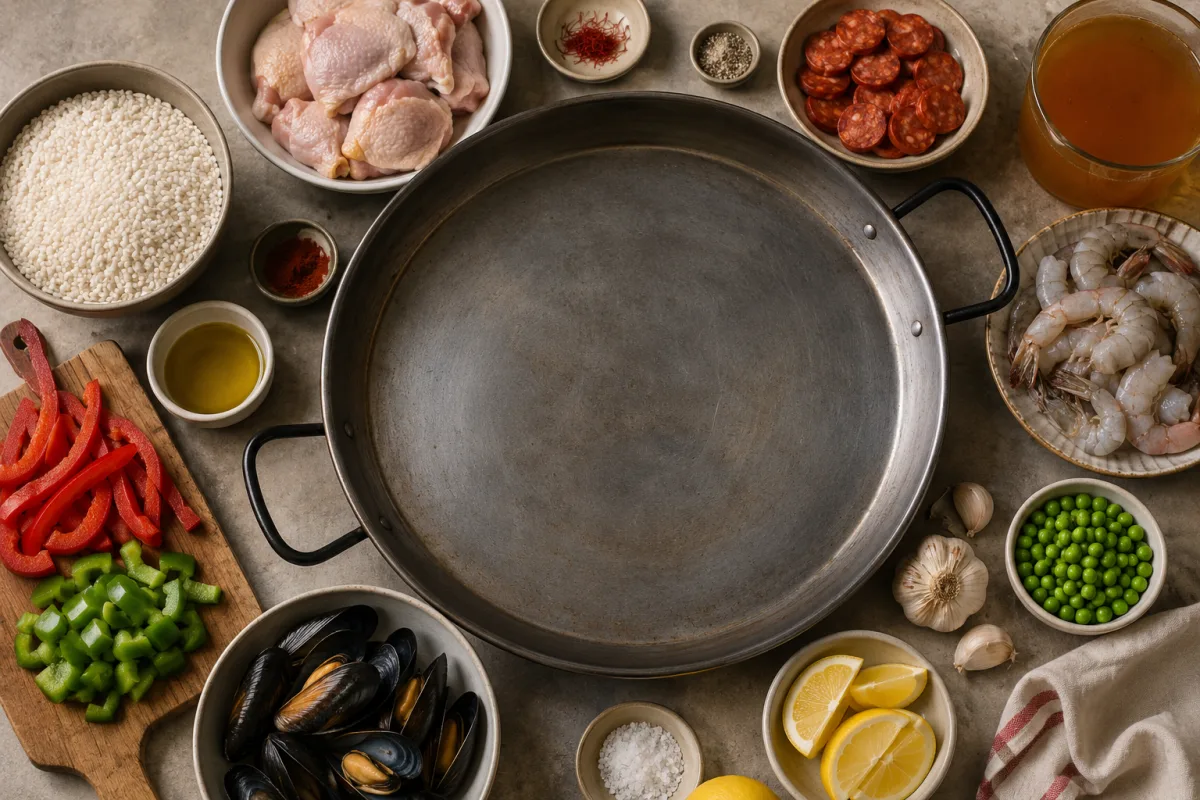
Use rice, chicken pieces, shrimp, mussels or clams, sliced chorizo, onion, garlic, tomato, bell pepper, peas, broth, saffron or turmeric, paprika, bay leaf, lemon, olive oil, salt, and pepper. Saffron gives the classic aroma, but many home cooks use turmeric for color when saffron is too costly. Use medium-grain rice if possible; long-grain rice works, but the texture changes.
Keep seafood cold until it is time to cook. Discard shellfish that smell bad or stay open after tapping. Food safety matters because paella brings several proteins into one pan. The FoodSafety.gov temperature chart gives safe minimum internal temperatures for poultry and other foods, and chicken should reach 165 degrees F.
Prep the toppings before the stove is hot. Peel or devein shrimp if needed, scrub shellfish, slice chorizo, chop aromatics, warm broth, and measure rice. Paella punishes a scattered cook because once the rice is in, the pan needs steady attention. A tidy prep tray keeps the dish relaxed instead of frantic.
How Do You Build The Flavor Base?
Start with oil in the pan, then brown the chicken lightly and remove it. Brown the chorizo just enough to release its fat. Add onion, garlic, bell pepper, and tomato, then cook until the mixture smells sweet and savory rather than raw. This base gives the rice something to absorb. If the aromatics are rushed, the finished dish tastes flat even with expensive seafood.
Add paprika, turmeric or saffron, bay leaf, and broth. Taste the broth before the rice goes in. It should be well seasoned because the rice will absorb that flavor. If you like building pantry seasoning mixes, Livecub's Asian seasoning mix guide is useful for thinking about balance, even though this paella uses a different flavor profile.
How Should You Cook The Rice?
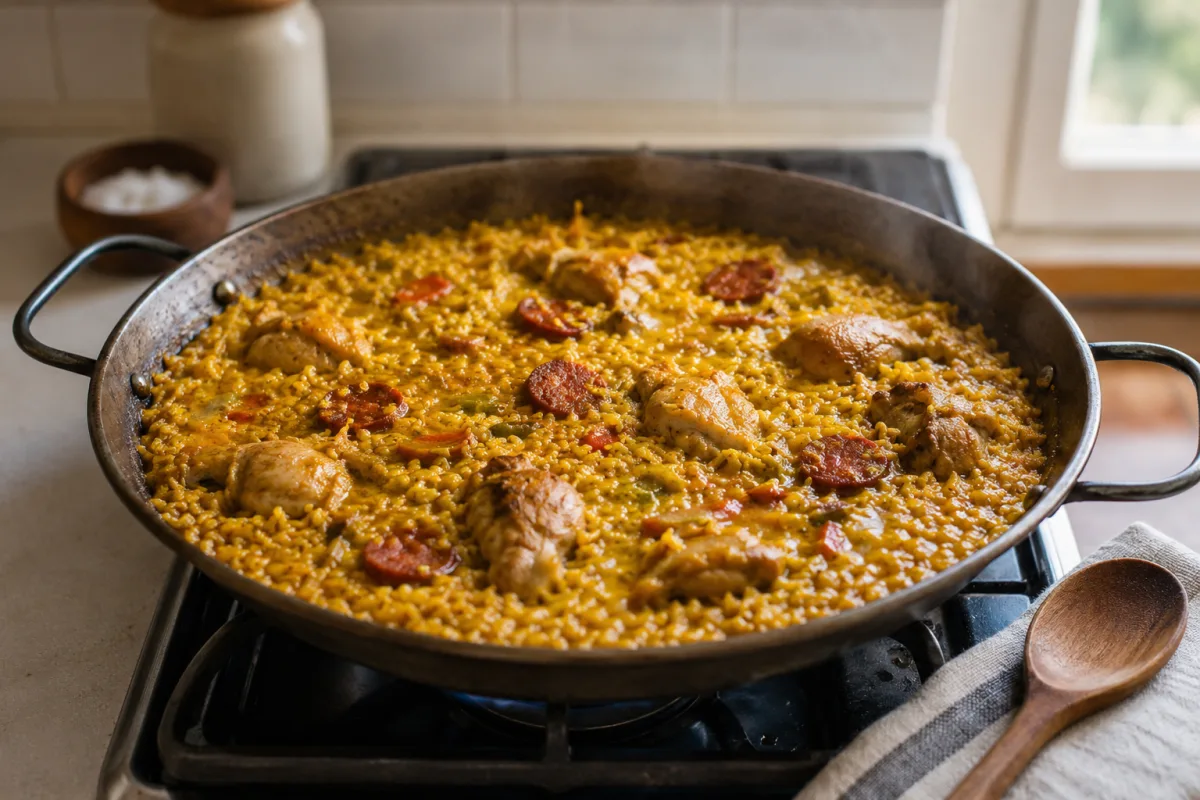
Add the rice evenly and stir only enough to distribute it. After that, leave it alone. This is the step many cooks ruin because they are afraid the bottom will stick. Paella needs contact with the pan. Stirring after the rice starts cooking releases starch and makes the dish heavy.
Think of the rice layer as the structure of the dish. If it is too deep, the top steams while the bottom burns. If it is too thin, the rice dries before the proteins finish. A broad pan gives the grains space to cook evenly and lets the toppings sit partly in the rice instead of sinking into a stew.
Keep the liquid at a lively simmer, then reduce as needed so the rice cooks without scorching too early. Add chicken back to the pan so it finishes with the rice. If the pan has dry spots, rotate the pan instead of stirring. A wide burner or grill can help, but a home stove works if you move the pan carefully.
When Do Seafood And Vegetables Go In?
Shrimp, mussels, clams, peas, and strips of pepper should go in near the end so they do not overcook. Press shellfish lightly into the rice, cover briefly if needed, and remove any shellfish that fail to open after cooking. Shrimp should turn opaque and firm, not tight and rubbery.
Chicken and sausage can handle more time, but seafood cannot. If the rice needs more cooking and the shrimp are already done, remove the shrimp and return them for serving. This small move keeps the pan flexible. The goal is a generous platter where each ingredient still tastes like itself.
Panlasang Pinoy shows how Filipino rice dishes often layer meat, seafood, vegetables, and color for a festive result. The same thinking works here: each topping should look intentional, but it also needs the right cooking time. Pretty seafood that has cooked too long is still a loss.
How Do You Get A Good Bottom Without Burning?
The browned bottom is part of the pleasure, but burnt bitterness is not. Once the rice is nearly cooked and liquid is mostly absorbed, raise the heat briefly and listen. A gentle crackle can signal that the bottom is setting. If you smell harsh smoke, back off. Resting the pan off heat helps finish the rice and loosen the bottom slightly.
Use your eyes too. The top grains should be tender or nearly tender, the liquid should be gone, and the edges should look set. If the rice is still hard and the pan is dry, add a small splash of hot broth around the edges. Do not flood the pan. Rescue with small moves, not panic.
After cooking, rest the paella for several minutes before serving. Cover it loosely if the kitchen is cool, but do not trap so much steam that the top turns wet. Resting lets the rice settle and makes serving cleaner. It also gives the cook a moment to add lemon, parsley, or sliced eggs if the family version uses them.
If the pan is for guests, bring it to the table whole. Paella loses some charm when it is scooped into a casserole before anyone sees it. Serve from the pan and let the colors do some of the work. Keep extra lemon nearby because a final squeeze wakes up the rice. Warm plates help the last servings stay pleasant.
What Should You Serve With Filipino Paella?
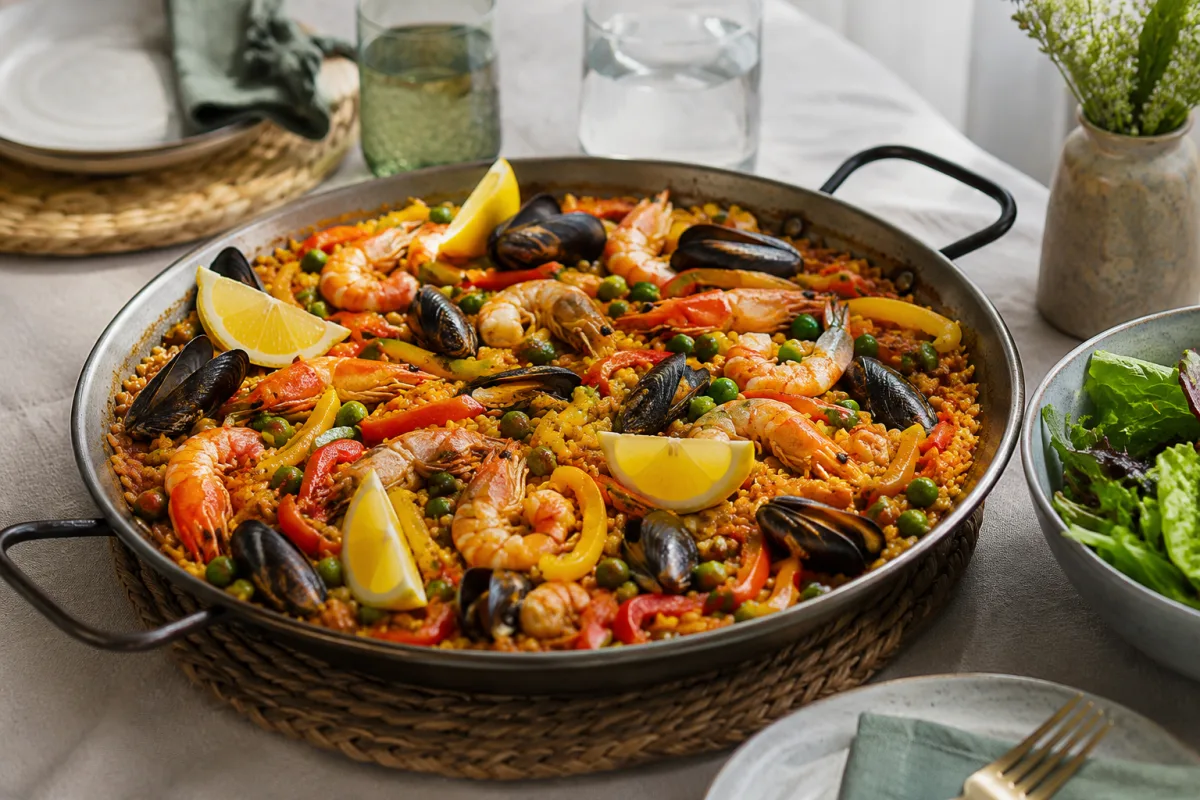
Serve paella with lemon wedges, a simple salad, pickled vegetables, or a light soup. The dish is already rich, so sides should sharpen the meal rather than weigh it down. A tray of grilled or fried chicken can work for a party, and Livecub's Chinese fried chicken wings can sit beside it if the table is built for sharing.
For a larger seafood spread, Livecub's easy clambake recipe offers another shellfish-centered meal with a different cooking method. Keep serving tools ready before the paella rests. People should gather around a finished pan, not wait while the cook hunts for spoons and lemon.
Frequently Asked Questions
Can I use regular long-grain rice?
Yes, but the texture will be less classic. Medium-grain rice usually gives a better paella-style bite.
Can I make Filipino paella without saffron?
Yes. Turmeric is often used for color. The flavor is different, but it still makes a good home version.
Can I cook paella in a wok?
A wide shallow pan is better. A wok can work in a pinch, but the rice layer may cook unevenly.
How do I store leftovers?
Cool leftovers quickly and refrigerate them in shallow containers. Reheat until steaming hot, and do not leave seafood rice at room temperature.
What is the easiest mistake to avoid?
Do not stir the rice after it is arranged in the pan. Rotate the pan and adjust heat instead.
What Is The Best Filipino Paella Habit?
Prepare every ingredient before the rice goes in. Slice the vegetables, clean seafood, warm broth, season chicken, and set the serving table. Once the rice starts, the pan needs attention. Filipino-style paella should feel festive at the table, but in the kitchen it rewards order.

Cashie Evans
Covers parenting and practical household topics with clear steps, safety notes and links to current guidance.


Leave a reply
Replying to