
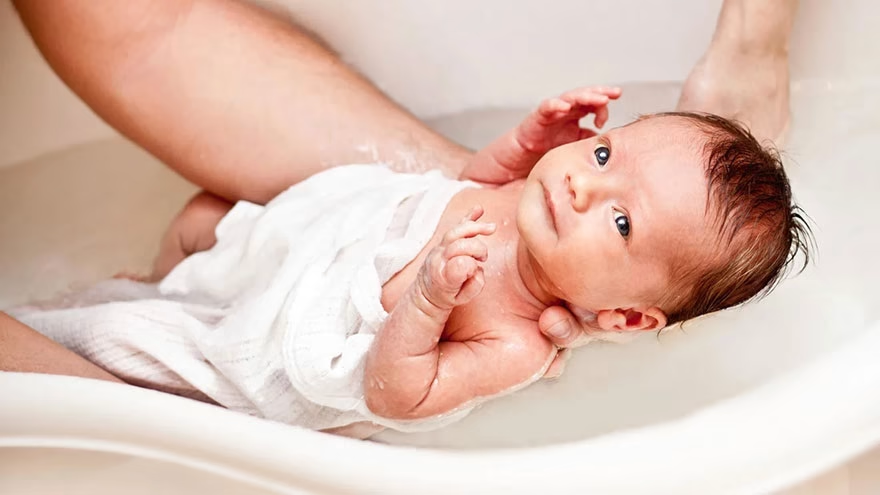
How to Use Soap on a Newborn at Bath Time is mostly about using less than adults expect. A newborn does not need bubbles, fragrance, scrubbing, or a daily soap routine to be clean.
The safest approach is warm water, steady hands, a warm room, and a tiny amount of mild cleanser only where it is needed. If your baby was premature, has eczema, has a healing cord or circumcision, or recently left the NICU, follow your clinician's instructions first.
Start With Water
For the first baths, plain warm water is usually enough. Newborn skin is thin, the skin barrier is still adjusting, and strong products can leave the baby dry or irritated.
The NHS says babies do not need a bath every day and parents may wash the face, neck, hands, and bottom instead. Its newborn washing guide gives a clear step-by-step routine.
Wait For A Calm Moment
Do not start when the baby is very hungry, newly fed, overtired, or cold. Choose a warm room, gather towels, diaper, clothes, cotton pads, washcloth, and cleanser before undressing the baby.
Keep one hand on the baby at all times. A newborn can slip even in shallow water, and a bath seat or folded towel does not replace adult touch.
Sponge Baths Before The Cord Falls
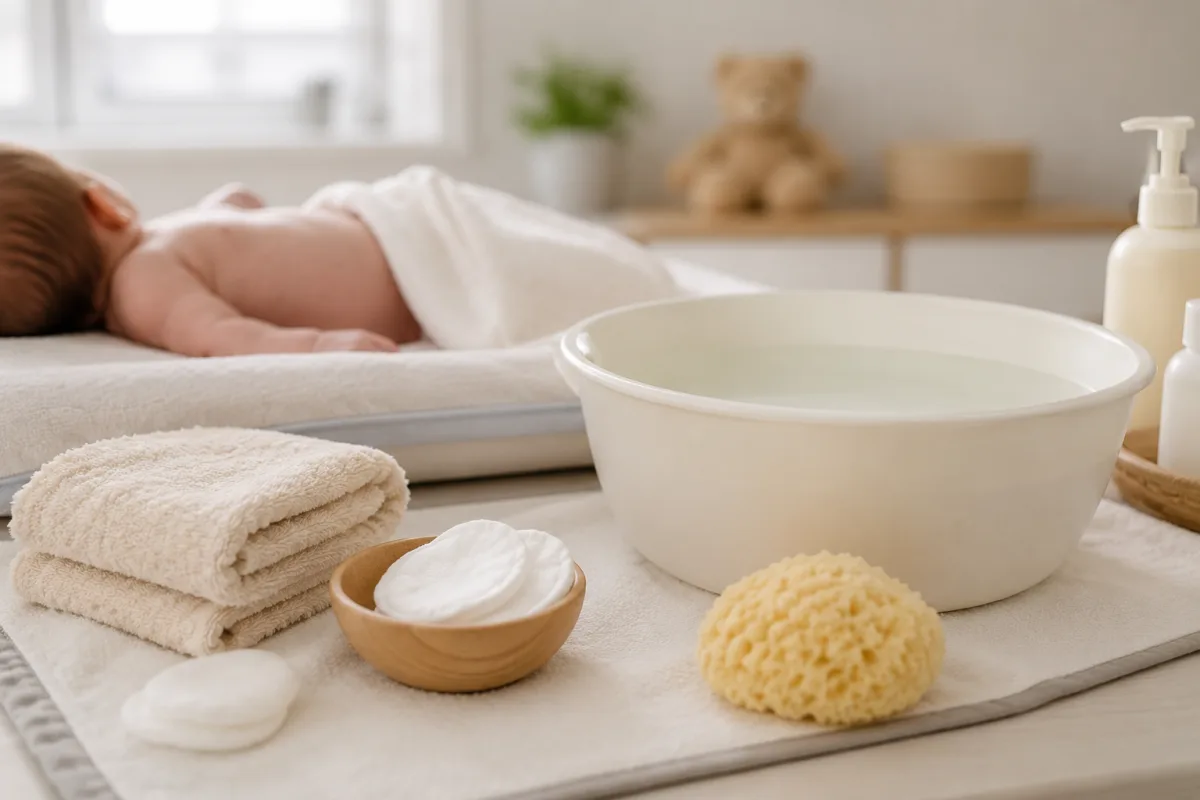
Many families use sponge baths until the umbilical cord stump falls off and the area is healing well. The goal is to keep the baby clean without soaking the stump for long periods.
Mayo Clinic notes that the American Academy of Pediatrics recommends sponge baths until the cord stump falls off. Its baby bath basics also walks through setup and safety.
Pick The Right Cleanser
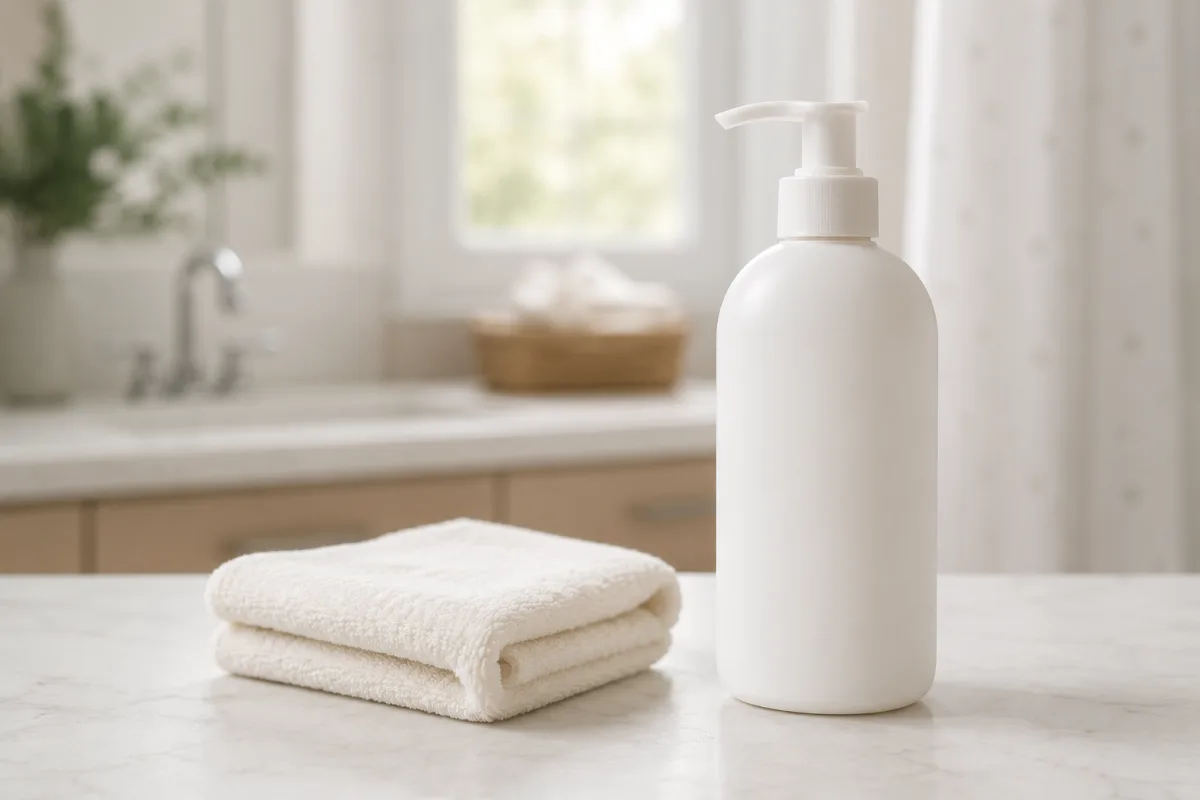
If you use soap, choose a mild, fragrance-free baby cleanser. Avoid adult soap, deodorant soap, scented bath foam, essential oils, exfoliating products, and antibacterial washes unless a clinician prescribed something.
Put a small amount on your hand or a wet washcloth rather than pouring it into the bath. This keeps the amount controlled and makes rinsing easier.
Where Soap Helps
Soap is most useful in creases where milk, spit-up, sweat, or stool can collect: neck folds, behind ears, armpits, hands, diaper area, and feet. Use a soft touch and rinse the area after washing.
The face usually needs water only. Avoid soap near the eyes and mouth. If the baby has sticky eyes, use clean cotton and plain water, wiping from the inner corner outward with a fresh piece each time.
How To Wash The Body
Undress only the part you are washing during a sponge bath so the baby stays warm. Clean from cleaner areas to dirtier areas, saving the diaper area for last.
For a tub bath, support the head and neck, lower the baby feet first, and keep the water shallow. Wash with one hand while the other supports the baby. Livecub's infant washing guide can help with the general order, but newborn soap use should stay minimal.
Rinse Well
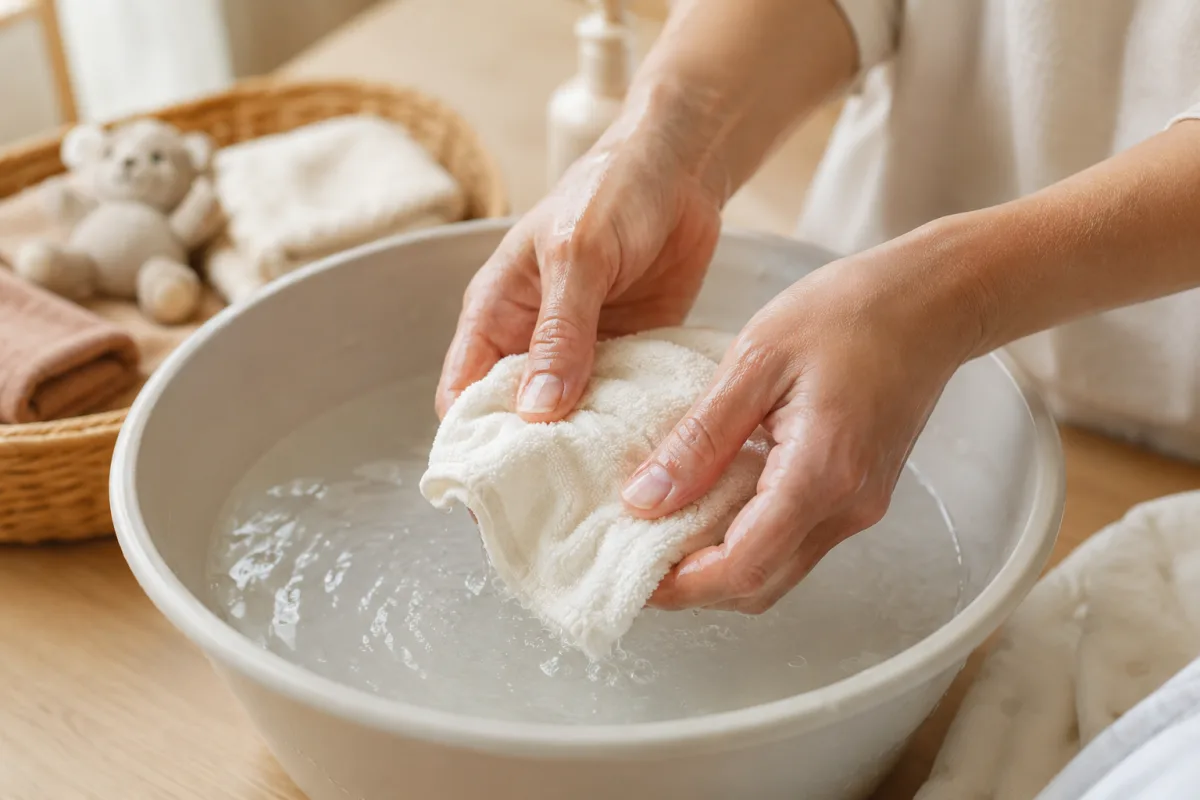
Even mild cleanser can irritate if left in folds. Use clean warm water on a washcloth or your hand to rinse any soapy area. Pay special attention under the chin, under arms, and around the diaper line.
After rinsing, pat dry rather than rubbing. Dry skin folds gently. Moisture left in folds can contribute to redness, especially under the neck where milk often collects.
Diaper Area Care
For stool, water and a soft cloth may be enough, but mild cleanser can help if the mess is sticky. Rinse well and dry before putting on a diaper cream or new diaper.
If redness appears, avoid scented wipes and extra products. Livecub's baby rash and blister guide may help you decide what needs routine care and what should be checked.
Cord And Circumcision Areas
Do not scrub the cord stump. Keep it clean and dry, fold the diaper below it if needed, and ask your clinician what signs of infection should prompt a call.
If your baby has a circumcision site, follow the discharge instructions closely. Livecub has separate guides on circumcision site care and care for a circumcised infant, which should not replace your pediatrician's directions.
How Often To Use Soap
HealthyChildren, from the American Academy of Pediatrics, says three baths a week during the first year may be enough if the diaper area is cleaned well. Its bathing and skin care page warns that frequent bathing, especially with soap, may dry skin.
A practical rule is to use soap only where water is not enough. Newborns do not sweat like older children playing outside, and they do not need a full soapy wash every day.
Safety Around Water
Set the water heater safely, test bath water with your wrist or elbow, and never leave the baby alone to grab a towel, answer the door, or check a phone.
As your baby grows and starts moving more, bathing safety becomes part of the bigger home safety picture. Livecub's room-by-room baby proofing guide can help prepare the next stage.
How Much Soap Is Enough
For a newborn, enough soap may mean a pea-sized amount for the whole bath or less. If you see a lot of bubbles, you are probably using more than the skin needs.
Use more water than product. A slick baby is harder to hold, and leftover cleanser can sit in folds after the bath.
Water Temperature
Bath water should feel warm, not hot. Test it with your wrist or elbow and swirl the water so there are no hot spots. Keep the room warm before undressing the baby.
If the baby cries from cold, pause and wrap them. A clean but chilled baby is not the goal; comfort and safety matter as much as washing.
After-Bath Skin Check
After drying, look at the neck, armpits, groin, behind ears, and diaper area. Mild temporary pinkness can happen, but spreading redness, cracking, oozing, blisters, or a foul smell should be checked.
Do not layer several new products at once. If irritation appears, it will be harder to know what caused it.
Product Testing
Try one new cleanser at a time and use it sparingly for several baths before adding anything else. Babies with eczema in the family may be more sensitive to fragrance and strong preservatives.
If a product stings your own cracked hands, it is probably too harsh for newborn skin. Choose bland over scented.
Night Routine
A bath can be part of a bedtime rhythm, but it does not need to happen nightly. A wipe of the face, neck, hands, and diaper area may be enough on most nights.
Keep the routine short so the baby does not become overtired. Newborn care works best when the bath fits the baby's state, not the clock.
Hair And Scalp
Newborn hair usually needs little product. If milk, spit-up, or flakes collect, use a small amount of mild baby cleanser, rinse well, and keep the baby warm while drying the scalp.
Do not pick at cradle cap or scrub hard. Ask the pediatrician if the scalp looks inflamed, cracked, or infected.
Keep Your Grip
Soap makes skin slippery, so wash one area at a time and rinse before changing your hold. Keep towels within reach before the baby is wet.
If you feel rushed or unsure, switch to a sponge bath on a flat safe surface. Confidence matters more than using a tub early.
Frequently Asked Questions
Can I use regular bar soap on a newborn?
It is better to avoid regular adult bar soap because it can be drying or irritating. Use plain water or a mild, fragrance-free baby cleanser when needed.
Do newborns need soap every bath?
No. Many newborn baths can be water-only, with soap saved for creases, the diaper area, or sticky messes that water does not remove.
Should soap go in the bath water?
Usually no. Put a tiny amount on your hand or washcloth so you can control where it goes and rinse it fully.
What if my newborn has dry skin after bathing?
Use less soap, bathe less often, rinse well, and ask your pediatrician before using lotions or ointments on irritated or broken skin.
Can I wash the baby's hair with soap?
Use only a small amount of mild baby shampoo or cleanser when needed, keep it away from the eyes, rinse well, and keep the baby warm.
Soap at newborn bath time should be quiet and limited: mild product, tiny amount, targeted areas, full rinse, soft drying, and no rush.

Linda Fehrman
Edits general wellness and relationship explainers. Health material is educational, avoids diagnosis and links to health-authority guidance.




Leave a reply
Replying to