
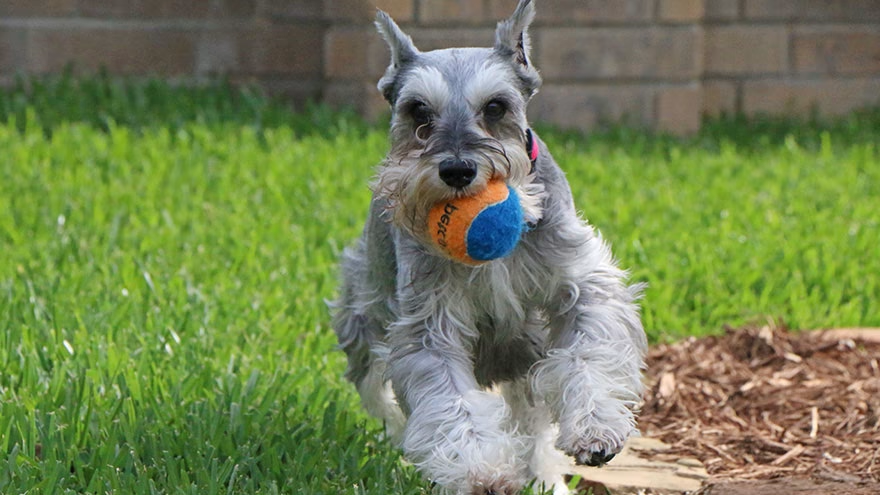
Miniature Schnauzer Training Guide starts with a dog that is bright, sturdy, alert, and often louder than new owners expect. This breed can be a delightful family companion, but training has to channel curiosity, watchdog instincts, and terrier confidence before they become barking, pulling, door rushing, or bossy household habits.
The best training plan is calm, consistent, and specific. Miniature Schnauzers usually do well when people teach what to do instead of only correcting what not to do.
Know The Breed Before Training
The AKC's Miniature Schnauzer breed page describes the breed as friendly, smart, obedient, and alert. Those traits are useful, but they come with energy. An alert dog notices the mail truck. A smart dog learns patterns fast, including patterns you did not mean to teach.
If you want a quick breed overview, Livecub's Miniature Schnauzer questions can sit beside this training plan. Use breed facts as a starting point, then train the individual dog in front of you.
Start With Household Rules
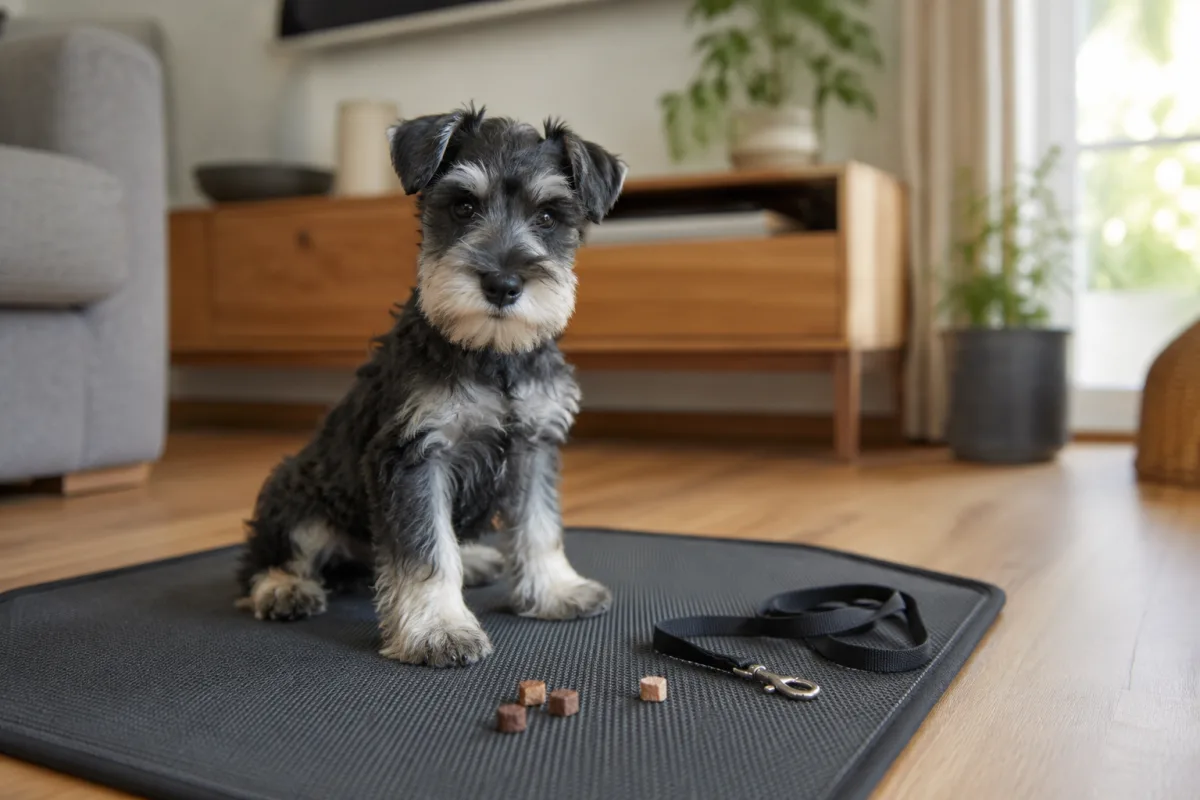
Decide rules before the dog arrives: furniture, sleeping place, door greetings, kitchen boundaries, crate or pen use, potty area, and walk routine. Every person in the home should use the same cues. A clever Schnauzer will find the person with the softest rules.
Rules should be fair, not fussy. A dog can sleep on the sofa if that is your choice, but it should also get off when asked. A dog can bark once at the door, but it needs a cue for quiet and a place to go.
Write the first five cues on the refrigerator: name, come, sit, down, and quiet. Add the exact hand signal or word each person will use. This sounds simple, but it prevents a family from teaching three different versions of the same behavior.
Use Short, Reward-Based Sessions
AKC's puppy training guidance points owners toward short, reward-based lessons. With a Miniature Schnauzer, five minutes done well can beat a long session that turns into nagging. Train sit, down, touch, name response, come, stay, leave it, and settle in tiny pieces.
Use food, praise, toys, or access to something the dog wants. Rewards are information. They tell the dog which behavior worked. Fade food gradually after the habit is clear, but do not rush the dog into guessing.
Use one cue at a time. Repeating "sit, sit, sit" teaches the dog that the cue is background noise. Say it once, help the dog succeed, reward, and reset. Clear timing matters more than a loud voice.
Potty Training And Crate Basics
Take puppies out after waking, eating, playing, and excitement. Reward outside success immediately. Limit freedom indoors until the dog has a pattern. Accidents mean the plan needs adjustment; punishment usually teaches the dog to hide.
A crate or exercise pen can help if introduced kindly. It should be a safe resting space, not a penalty box. Use meals, chew toys, and short calm periods so the dog learns to relax alone. VCA's puppy training basics also stresses consistency, gentle handling, and realistic expectations during the early learning period.
Keep a written potty schedule for the first week. Write down meals, water, naps, play, outdoor trips, and accidents. Patterns appear quickly. If accidents happen at the same time every day, take the dog out before that time instead of cleaning the same mistake again.
Teach Quiet Without Fighting Barking
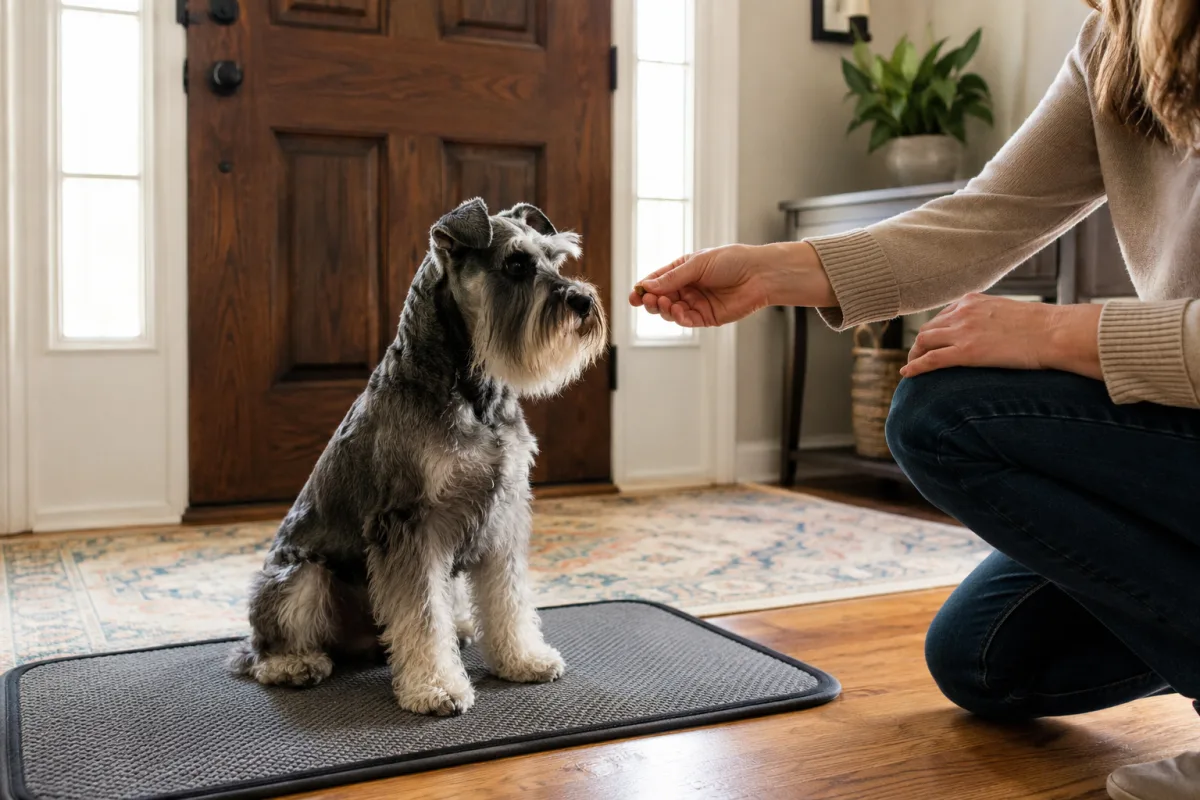
Miniature Schnauzers are known for alert barking. Do not try to win a shouting match. Teach a sequence: dog hears noise, you acknowledge it, cue quiet, reward silence, send the dog to a mat. Practice with easy noises before the real doorbell chaos.
If the dog barks from window duty, block the view part of the day. Training works better when the environment stops rehearsing the behavior all afternoon.
Teach the mat separately from barking. Toss a treat on the mat, reward the dog for stepping on, then for sitting, then for lying down. When the mat is already valuable, it becomes a real answer during door noise instead of a command the dog has never practiced.
Leash Manners
Begin leash work in a quiet place. Reward the dog for checking in, walking near your leg, and turning with you. If the dog pulls, stop, change direction, or reward a return to your side. Do not let pulling become the way to reach every smell.
Small dogs still need real leash training. Pulling can irritate the neck and teach frantic walks. Use well-fitted walking gear and keep sessions short enough that the dog can succeed.
Miniature Schnauzers often love sniffing, so use it as payment. Ask for three or four calm steps, then release the dog to sniff a safe patch. This teaches the dog that polite walking makes good things happen.
Recall needs the same logic. Practice indoors, then in a fenced area, then on a long line. Pay with excellent treats and release the dog back to fun often. If come always ends play, a smart dog learns to hesitate.
Grooming As Training
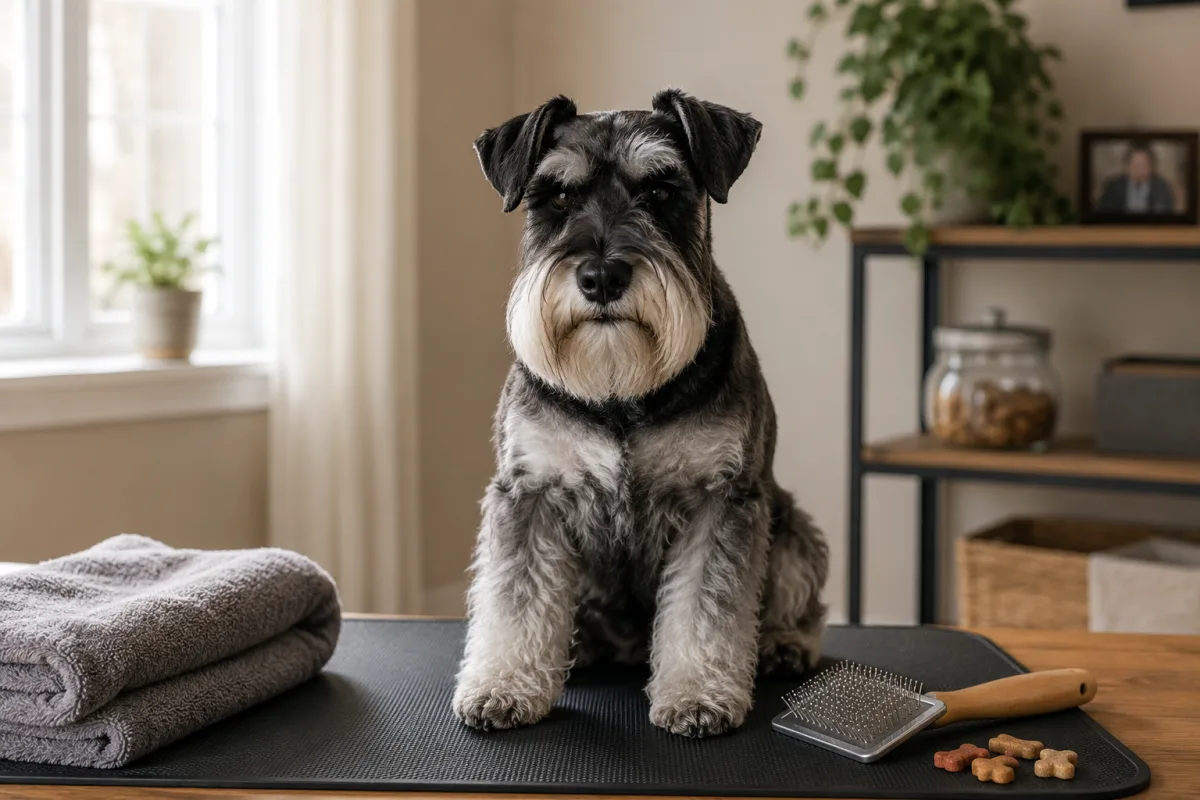
Miniature Schnauzers need coat care. Teach handling early: chin rest, paw touch, ear check, brushing, nail file, and standing on a mat. Reward calm moments and stop before the dog panics.
Livecub's longhair Dachshund grooming guide is about another breed, but the handling lesson transfers. Grooming cooperation is trained in tiny steps, not forced during one long session.
Socialization Without Overdoing It
Socialization means positive exposure, not letting every stranger grab the puppy. Pair new surfaces, sounds, people, hats, bikes, children at a distance, and other dogs with treats and calm exits. The dog should learn that new things are normal.
If your Schnauzer is fearful, make the setup easier. Distance helps. Forced greetings can make a cautious dog worse.
Keep children involved with rules. They can toss treats, practice cue words, fill puzzle toys, and help with calm walks, but they should not chase, corner, or pick up the dog. A small dog still deserves space.
Prevent Boredom Trouble
A bored Miniature Schnauzer may bark, dig, shred, chase, or invent work. Give sniff walks, puzzle feeders, short training games, tug with rules, and safe chews. Mental work is not optional for a smart dog.
For comparison across companion breeds, Livecub's Maltese questions and Lhasa Apso questions show how small dogs can differ in coat, temperament, and training style.
Adolescence can be the rough patch. A dog that knew cues at five months may seem distracted at ten months. Go back to easier setups, pay generously for good choices, and keep rules steady. Regression is not a reason to quit training. It is a reason to simplify the lesson, lower distractions, and rebuild confidence with calmer daily practice.
Health Can Affect Training
If a trained dog suddenly resists touch, growls, has accidents, avoids stairs, or stops eating, check health. Dental pain, ear infection, skin irritation, urinary problems, and sore joints can look like behavior problems.
Livecub's Staffordshire Bull Terrier health article covers a different breed, but the general rule applies: pain changes behavior.
Keep training notes for recurring problems. If barking spikes every evening, the dog may be overtired or reacting to a predictable hallway sound. If leash pulling appears only near dogs, the training plan should focus on distance and calm observation, not heel drills in the kitchen.
Frequently Asked Questions
Are Miniature Schnauzers easy to train?
Many learn quickly, but they need consistency, mental work, and fair rules because they are smart and alert.
How do I stop Schnauzer barking?
Teach quiet, manage window triggers, reward silence, and give the dog a job such as going to a mat.
Can Miniature Schnauzers be left alone?
They can learn alone time gradually, but long lonely days can lead to barking or destructive behavior.
When should grooming training start?
Start immediately with short, gentle handling sessions for paws, face, ears, brushing, and standing still.
Do they need much exercise?
They need daily walks, play, and mental work. Tired should mean settled, not exhausted.
What age is hardest for training?
Adolescence can be challenging because the dog has more energy and confidence. Go back to basics and keep rewarding good choices.
A Training Plan That Lasts
Train a Miniature Schnauzer with clarity, rewards, handling practice, barking plans, and enough daily work for the brain. The breed is clever enough to learn fast, so make sure the lessons you repeat are the ones you actually want.

Chiara Bradshaw
Covers education, culture and creative topics with an emphasis on readable explanations and verifiable references.
Leave a reply
Replying to