
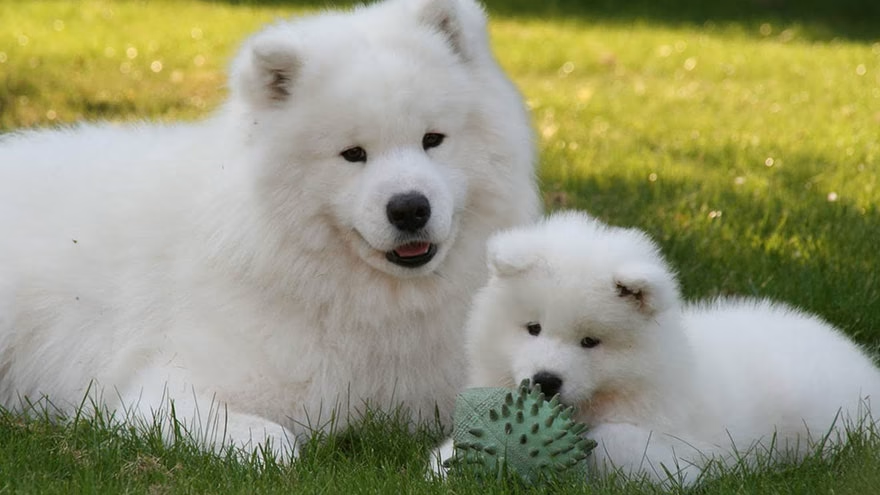
Owning a Samoyed means sharing your home with one of the oldest working breeds on Earth — a dog shaped not by a kennel program but by centuries of life alongside the Samoyedic people of western Siberia. These semi-nomadic hunters and reindeer herders depended on their dogs for everything: hunting, pulling sleds across frozen tundra, and sleeping beside them through Arctic nights to keep both human and dog warm. That history matters, because it explains almost everything about why this breed behaves the way it does today. The Samoyed is not a dog that tolerates the periphery of family life. It was bred to be in the middle of it.
If you are researching a Samoyed breeder or simply wondering whether owning a Samoyed fits your life, this guide covers the full picture — breed background, how to distinguish responsible breeders from problem sources, which health tests matter, and an honest look at the coat care commitment that catches many first-time owners off guard.
The Samoyed's Siberian heritage — what shaped this breed
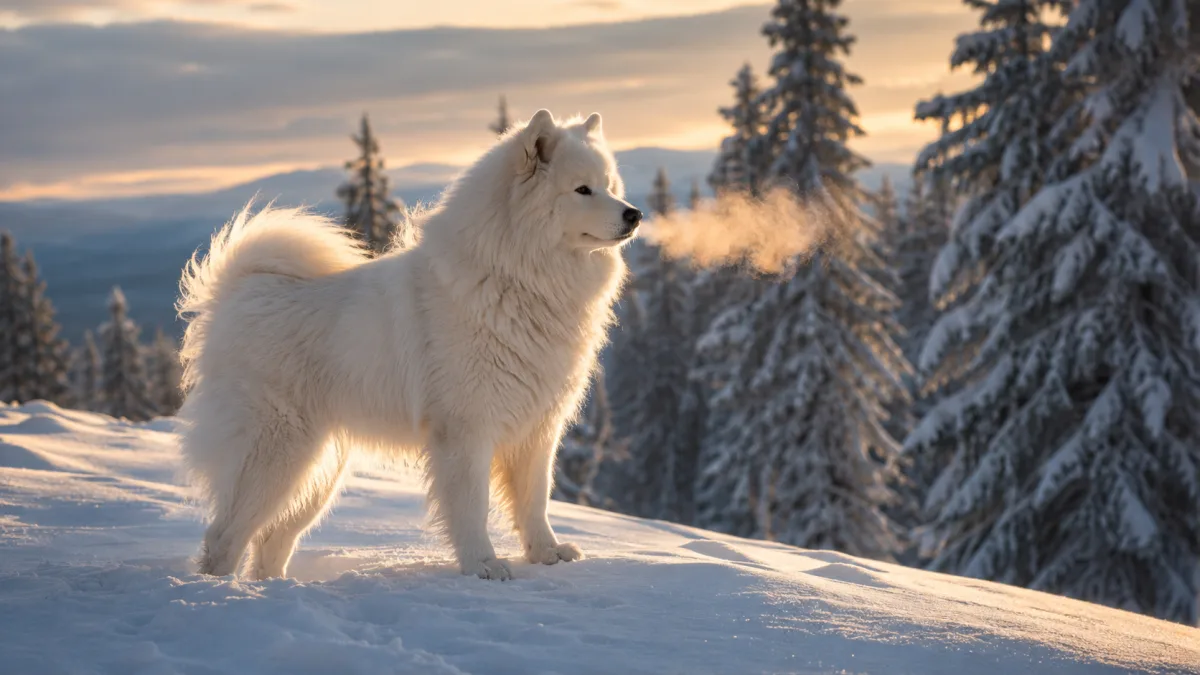
The Samoyed belongs to the ancient Spitz family of Nordic working dogs. The American Kennel Club recognized the breed in 1906 — the first registered Samoyed in the United States was the Russian champion "Moustan of Argentau" — and classifies it in the Working Group today. Males stand 21 to 23.5 inches at the shoulder and weigh 45 to 65 pounds; females run slightly smaller at 19 to 21 inches and 35 to 50 pounds. The build is substantial but not heavy — these are tireless athletes, not ornaments.
The AKC breed standard calls the Samoyed "essentially a working dog" and that descriptor is not decorative. For thousands of years the Samoyedic people could not afford to keep a dog that did not earn its keep. The result is a breed with genuine versatility: the Samoyed hunted, herded reindeer, pulled sleds, and at night served as a living hot-water bottle inside the family's shelter.
That perpetual expression — the famous "Sammy smile" — is not merely charming. The upturned corners of the mouth are a functional adaptation. Drool that would freeze instantly in sub-zero temperatures could mat the facial coat and damage it; the upcurved lip corners prevent drool from forming in the first place, keeping the dog's face dry and the coat intact. What looks like contentment is, in a very literal sense, a survival feature.
Is a Samoyed right for your lifestyle?
This is a breed that asks a great deal of its owners, and the asking begins before the dog is an adult. A Samoyed that does not get enough human contact, exercise, and mental engagement will tell you about it — loudly, and through your furniture. Before committing, run through the following honestly.
Time at home. Samoyeds were bred to live with their families around the clock. A dog left alone for nine or ten hours a day on a regular basis is a dog that will likely develop anxiety and destructive habits. This is not a temperament flaw; it is the predictable result of keeping a socially wired animal in isolation. If your schedule demands very long absences, a Samoyed is probably not your best match.
Exercise commitment. This is an athletic breed that needs meaningful daily exercise — not a short walk around the block but an hour or more of active movement. Samoyeds excel at dog sports including agility, herding trials, recreational sledding, and skijoring. A tired Samoyed is a well-behaved Samoyed.
Grooming time. The coat is the breed's single largest maintenance burden, and it is larger than most prospective owners expect. More on this shortly.
Fencing. Samoyeds are escape artists. A curious dog with energy to spare and an unfenced yard is a dog that will explore your neighborhood. Solid fencing at a minimum of five or six feet is not optional.
If those requirements fit your situation, the payoff is a dog that is genuinely affectionate, good-natured with children and strangers alike, and capable of a deep, almost uncanny bond with its people. For the right household, few breeds are more rewarding.
Samoyeds do well with other large breeds and generally get along well with dogs of any size. Their size and exuberance can knock toddlers off their feet, so supervision around very small children is sensible even with a friendly dog.
How to find a reputable Samoyed breeder
The gap between a responsible Samoyed breeder and a volume seller is enormous, and the consequences of choosing carelessly show up years later in veterinary bills and heartbreak. Start with the Samoyed Club of America's breeder listing — SCA members have agreed to a code of ethics and are at least a known starting point. If no listings are available in your region, a breeder on the list may refer you to someone they trust.
Avoid pet stores entirely. Reputable Samoyed breeders do not sell through retail channels. Avoid sellers on Craigslist and similar platforms who have multiple breeds simultaneously available, cannot tell you which health tests the parents have completed, or who pressure you to make a quick decision. These are signals, not minor irregularities.
When you contact a breeder, expect to be asked questions about your home, lifestyle, and experience. That screening process is a good sign. In return, ask the breeder:
- How long have you been breeding Samoyeds, and how often do you produce litters?
- What health clearances do both parents have, and can I verify them on the OFA website?
- May I visit to see the dam and the litter in person?
- Do you take a dog back at any point if I am unable to keep it?
- Can you provide references from previous puppy buyers?
A breeder who will not allow a visit, cannot produce documented health clearances, or deflects questions about the parents is not a breeder worth working with, regardless of how appealing the photos look online.
Reputable breeders typically have waiting lists. Expecting to call today and pick up a puppy next week is not realistic with responsible breeders, and instant availability should make you cautious rather than relieved.
The principles for finding a reputable Samoyed breeder are similar to those for any well-regarded breed. Owners of Brittany Spaniels and Rottweilers face the same challenge of separating dedicated hobby breeders from volume sellers.
Health tests to ask your breeder about
The Samoyed Club of America, working with the AKC's Canine Health Information Center (CHIC) program, currently recommends five health clearances for breeding dogs. A Samoyed that completes all five earns a CHIC number — a publicly searchable record in the OFA database at offa.org. A CHIC number confirms that testing was done and results were published; it does not guarantee that every result was clear, which is why you should look up the specific dog rather than simply accepting that a CHIC number exists.
The five SCA-recommended clearances are:
- Annual ophthalmologist evaluation (eye exam by a board-certified veterinary ophthalmologist, under the CAER program)
- Hip evaluation by the Orthopedic Foundation for Animals (OFA) or an equivalent organization
- Cardiac exam by a board-certified veterinary cardiologist
- DNA test for Progressive Retinal Atrophy (X-linked PRA, a heritable eye disorder)
- DNA test for Retinal Dysplasia/OSD (another heritable eye condition)
You may also see responsible breeders voluntarily testing for elbow dysplasia, thyroid function, and patellar luxation, though these are not currently part of the official CHIC protocol.
One condition deserves particular attention: Samoyed hereditary glomerulopathy, also called hereditary nephritis or X-linked nephritis. This is a serious inherited kidney disease caused by a mutation in the COL4A5 gene on the X chromosome. The mutation results in a 90% reduction in the type IV collagen that the kidneys need to function normally. Because males have only one X chromosome, affected males develop progressive renal failure and typically die by 15 months of age. Females with one copy of the mutation are carriers — their disease progresses more slowly and manifests later, but they can pass the mutation to offspring. DNA testing through laboratories such as Embark can identify carriers before breeding decisions are made. Ask any breeder you are considering whether the parents have been tested, and verify the answer.
This condition is one reason why breed health testing matters well beyond the standard hip and eye clearances. For more context on health screening practices in other breeds, see our coverage of Staffordshire Bull Terrier health problems.
Samoyed coat care — the biggest commitment in the breed
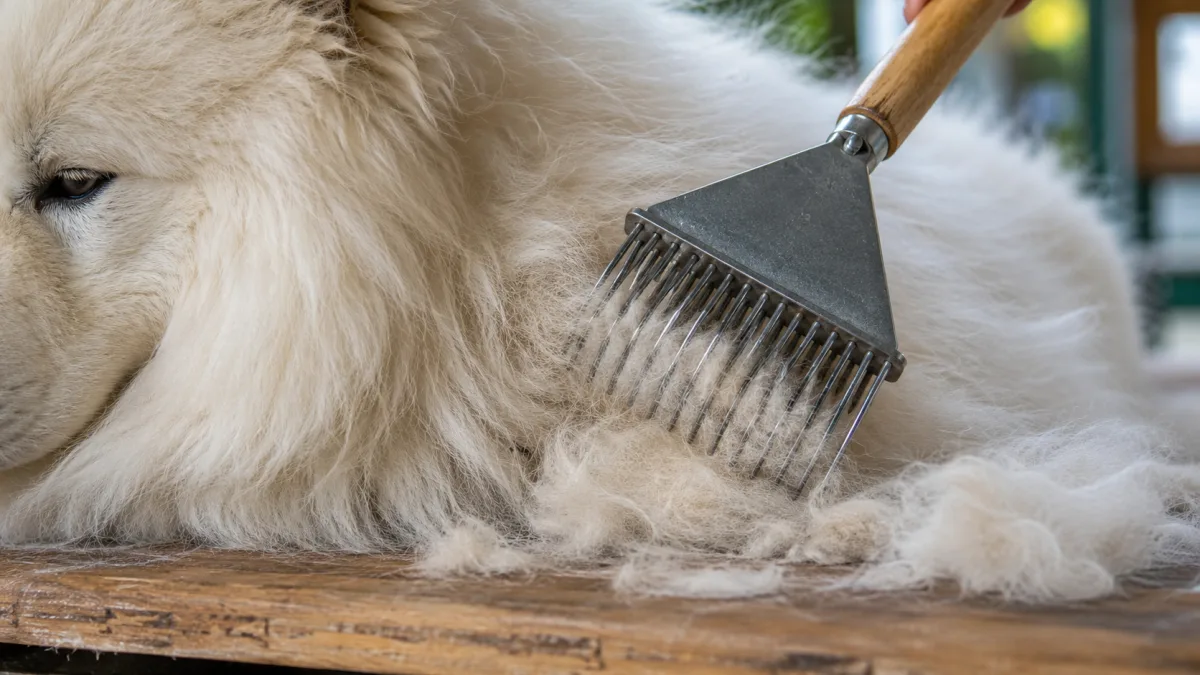
The Samoyed coat is a double coat: a dense, woolly undercoat close to the skin, and a longer, straight outer coat that stands away from the body and gives the breed its characteristic puffed appearance. The outer coat naturally repels dirt and moisture — a Samoyed that rolls in mud often shakes clean with less effort than you would expect. The undercoat is another matter entirely.
Under normal conditions, plan on brushing sessions of 30 to 45 minutes at least twice a week. More than the time commitment, the technique matters: a pin brush and slicker brush handle the outer coat; an undercoat rake is essential for reaching through to the dense layer beneath. Skipping the undercoat during routine brushing leads to matting at the skin level, which is painful to remove and can cause skin problems if left untreated.
Twice a year — typically spring and fall — the undercoat sheds in mass. This is called "blowing coat," and the description is accurate. During a coat blow, which can last two to four weeks, the undercoat loosens and releases in enormous quantities. Daily brushing for the entire duration of the blow is not an exaggeration; it is the minimum required to prevent the shed undercoat from packing against the skin and forming dense, painful mats. An undercoat rake or deshedding tool used daily during this period can save you hours of mat removal later.
Many owners schedule professional grooming every six to eight weeks under normal conditions, and bump that to every four to six weeks during shedding seasons. This is an ongoing cost worth budgeting for honestly before acquiring the breed.
One note on shaving: do not do it. The double coat insulates against both cold and heat. Shaving does not make a Samoyed more comfortable in summer — it removes the very insulation that regulates body temperature and exposes the skin to sunburn. A properly groomed coat, with the dead undercoat removed, actually allows air circulation and helps the dog stay cooler than a shaved coat would.
A footnote for the curious: the undercoat collected during brushing can be spun into yarn. The fiber is sometimes called "chiengora" and has been used by fiber artists for generations. The resulting yarn is soft, warm, and odorless when dry — a genuinely practical use for what would otherwise fill your vacuum cleaner.
If you have experience grooming other long-coated breeds, the skills transfer — but the scale is different. Our guide to grooming long-haired Dachshunds covers double-coat principles that apply here as well.
Samoyed temperament and living with this breed
The Samoyed is reliably friendly — with family, with strangers, with other dogs, with children. That warmth is genuine and not selective. It also means the Samoyed makes a very poor guard dog; a Samoyed is more likely to accompany an intruder on a tour of the house than to raise an alarm. If security is what you need, look elsewhere.
Vocalization is a real characteristic of the breed. Samoyeds bark, and some do it enthusiastically. Neighbors in close quarters should be part of your calculation when considering this breed. Early training to manage excessive barking is easier than correcting it later.
The breed has a streak of independence that can read as stubbornness in training. Repetitive drills do not hold a Samoyed's interest; positive reinforcement with variety and genuine engagement works far better. These are intelligent dogs that can learn a great deal, but they prefer to understand why they are doing something rather than executing commands mechanically.
Separation anxiety is a genuine concern. A Samoyed left alone for extended periods day after day will often express its distress through chewing, digging, or prolonged barking. Gradual desensitization to alone time, starting when the dog is a puppy, helps significantly. So does ensuring the dog has been well exercised before you leave.
For owners interested in comparing breed temperaments, our Lhasa Apso overview and Basset Hound FAQ cover how other breeds handle companionship needs differently.
Climate considerations and exercise for Samoyeds
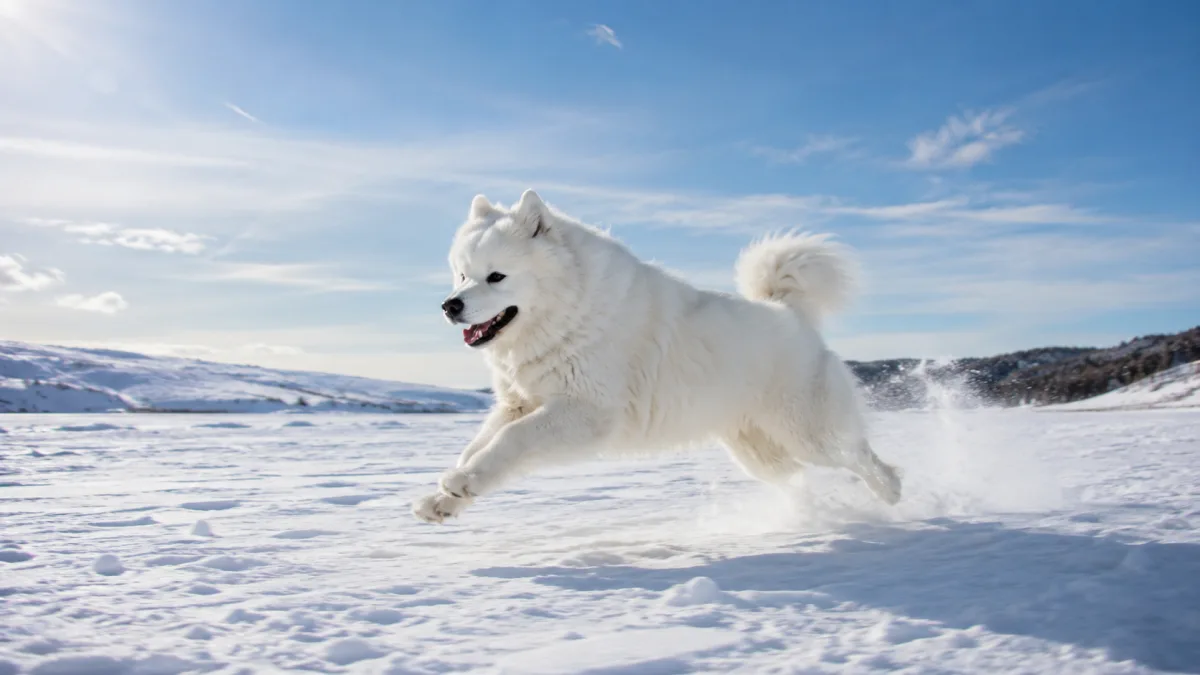
This is a breed built for Siberia. Cold weather is not just tolerated — it is genuinely enjoyed. A Samoyed in a snowy yard is in its element, and will often choose to stay outside in temperatures that would send most other breeds straight to the door.
Heat is the opposite story. The breed struggles in warm climates, and exercising a Samoyed in temperatures above roughly 75°F carries real risk of heat stress. In summer months, schedule walks for early morning or evening. Always provide shade and fresh water, and watch for signs of overheating: heavy panting, drooling, lethargy, or stumbling. If you live in a reliably hot climate, this breed requires air conditioning and careful management of outdoor time during warm months.
Exercise needs are real and sustained. This is not a breed that stays content with minimal movement. Aim for at least an hour of genuine physical activity daily — not just yard access, but actual exercise: brisk walks, off-leash running in a securely fenced area, or a sport that engages both body and mind. The Samoyed's heritage as a sled dog and reindeer herder means it was selected for endurance, and that endurance needs an outlet.
Samoyed rescue — an alternative to buying a puppy
Not every Samoyed that needs a home came from a poor situation. Sometimes owners face changed circumstances — a move, a health crisis, a family change — and need to rehome a well-socialized, well-cared-for adult dog. Adopting through rescue is a legitimate and often rewarding path to Samoyed ownership.
The Samoyed Club of America maintains a list of rescue groups that meet the SCA's qualifying criteria, including rescuing primarily Samoyeds and having at least one SCA member on their governing body. National Samoyed Rescue (samoyedrescue.org) acts as a coordination and support resource for regional groups across the country.
An adult rescue Samoyed may arrive already house-trained and past the most demanding puppy stages. You will also have a clearer picture of the dog's actual temperament than you would with an eight-week-old puppy. Rescue dogs often require a settling-in period as they adjust to a new home, but many transition smoothly with patience and consistent routine.
Frequently Asked Questions
Are Samoyeds good family dogs?
Yes, with some qualifications. Samoyeds are affectionate, gentle, and reliably friendly — qualities that make them excellent family dogs for households with the time and resources to meet the breed's exercise, grooming, and companionship needs. Their size and energy can knock very young children over, so supervision matters, but the breed's temperament is not aggressive and most Samoyeds genuinely enjoy the company of children.
How much grooming does a Samoyed really need?
More than most prospective owners anticipate. During normal periods, plan on two to three thorough brushing sessions per week lasting 30 to 45 minutes each. During the twice-yearly coat blow — a two-to-four-week period in spring and fall when the undercoat sheds en masse — daily brushing is necessary to prevent painful matting. Professional grooming every six to eight weeks is standard practice for many Samoyed owners. This is the aspect of ownership most consistently underestimated by people buying their first Samoyed.
What health tests should a Samoyed breeder provide?
The Samoyed Club of America recommends five clearances for breeding dogs: annual ophthalmologist evaluation (CAER exam), OFA hip evaluation, cardiac exam by a board-certified cardiologist, DNA test for X-linked Progressive Retinal Atrophy, and DNA test for Retinal Dysplasia/OSD. Dogs that complete all five earn a CHIC number verifiable at the OFA database at offa.org. Additionally, ask specifically about DNA testing for Samoyed hereditary glomerulopathy, a serious X-linked kidney disease that can cause fatal renal failure in male dogs before 15 months of age.
Can Samoyeds be left alone during the day?
Not comfortably for extended periods, and not regularly. Samoyeds were bred to work and live alongside people; long daily isolation typically leads to anxiety, destructive behavior, and persistent barking. If your schedule requires the dog to be alone for more than four to five hours on most days, this breed is worth reconsidering. Owners who must be away longer often supplement with doggy daycare, a dog walker, or a second dog for company.
Do Samoyeds do well in hot climates?
With management, yes — but they are not built for heat, and the management requirement is genuine. In warm months, limit outdoor exercise to early morning and evening hours. Never shave the coat; the double coat provides insulation against heat as well as cold, and shaving removes that protection while exposing skin to sunburn. Air conditioning is effectively a necessity in regions with prolonged hot summers. Some Samoyed owners in warm climates manage successfully, but it requires consistent attention and planning.

Chiara Bradshaw
Covers education, culture and creative topics with an emphasis on readable explanations and verifiable references.

Leave a reply
Replying to